


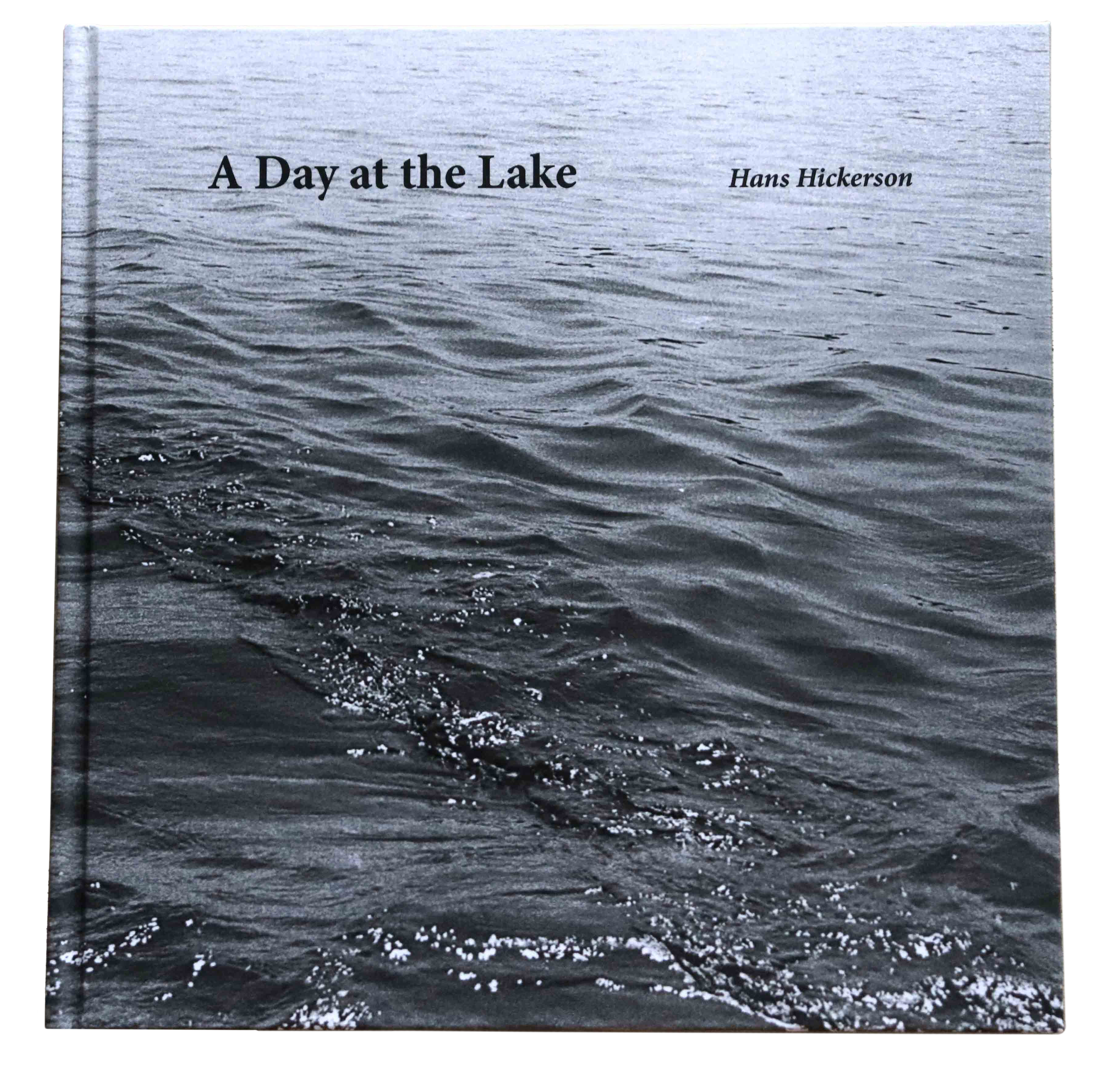
Hans Hickerson
Hans Hickerson
A Day at the Lake
96 Pages
Hardcover
78 duotone photographs
Fishpond Press
2024
About the Book:
A Day at the Lake tells the story of an end-of-school-year class trip. The year was 2000 and the location a lake in Germany. Photographer and author Hickerson was teaching English at a school in Saarbrücken, and he and a colleague took a class of middle schoolers on a day-long excursion. First-person reportage along with a measure of Gerry Badger's "personal poetics of lived experience,” Hickerson’s photographs eschew the tourist-with-a-camera mode of photography and offers the point of view of an insider and participant. An example of the singular inhabiting the commonplace, they share with us an event that left behind memories as well as photographs. Like several of Hickerson’s photobooks, A Day at the Lake offers a distinctive contribution to the contemporary photobook conversation through its idiosyncratic image / text narrative form as well as given its unusual choice of subject.

Book review by Matthew Poburyny |
If memories had memories, they would be of summer days, of youth, and of swimming. And much like summer vacation only has two dates (the day it starts and the day it ends), A Day at the Lake, by Hans Hickerson, thrives at the points of beginning and ending, because let's be honest, who can really remember the magic that happens in-between?
A Day at the Lake takes us along with teachers (Hans being one of them) and students on an end-of-year trip to a reservoir for hiking, eating, swimming, and the general summer fun expected from such a school trip. We know all this because the text interspersed throughout the book, like itinerary chapters, tells us so, and the photos fill in the blanks along the way.
Hans presents lines of text that are descriptive, drab, and mundane, doing no more than articulating the preceding actions of the students in the images, as the text breaks the book into sequences befitting their annotated activities.
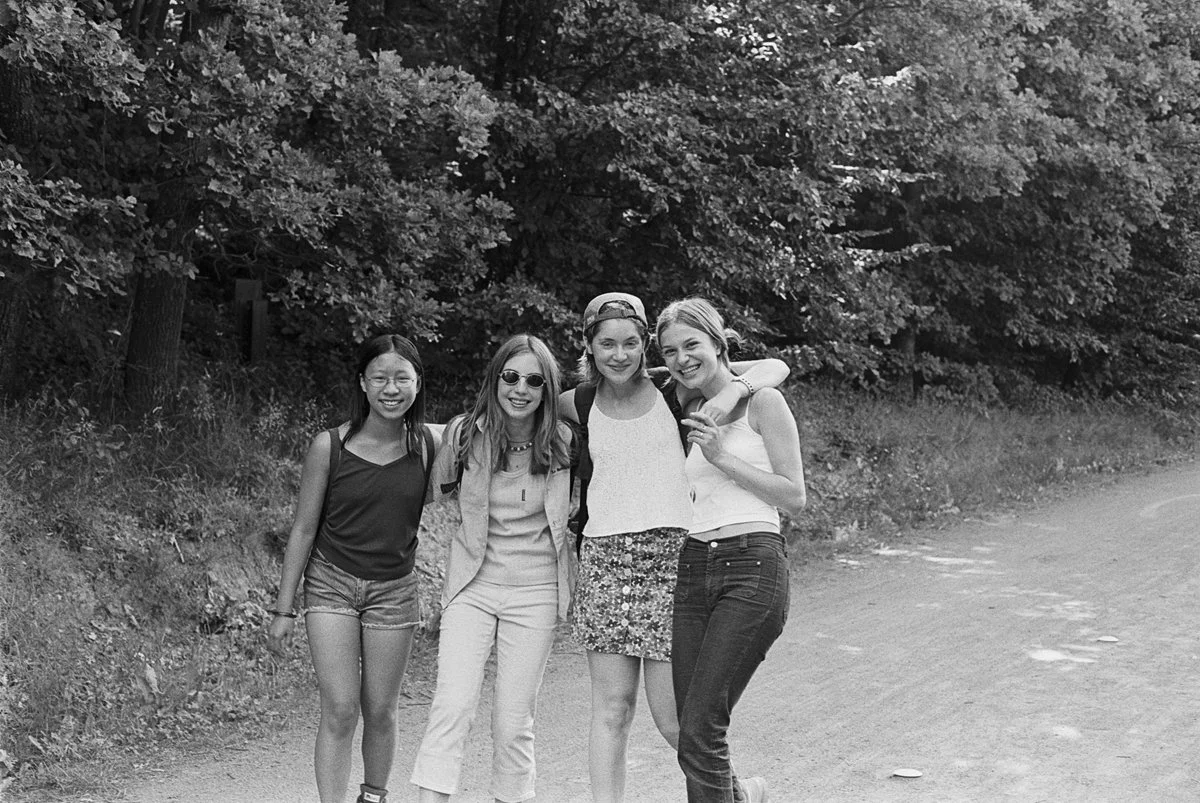
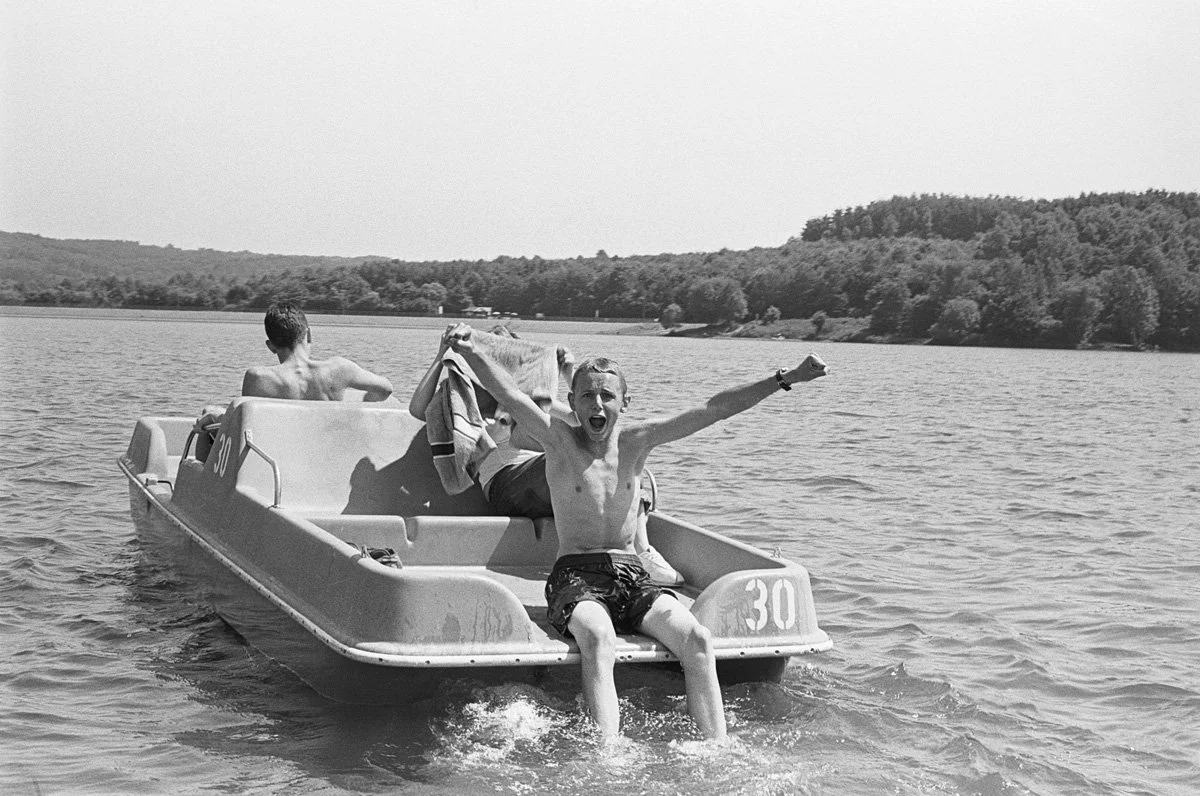
I found the text neither enhances nor detracts from the book until I read the last entry, which gave the entire book weight and immediacy, forcing me to revisit the work with a shared sense of urgency with the photographer.
Every photo, every bit of textual annotation, becomes appreciated once we learn, as we board the bus back home, that this will be the last time Hans will ever see his students.
A Day at the Lake is like a butterfly net swinging at the ineffable, at an already fading memory, evening mist slipping through the netting.
You can feel the camera's attempt to capture the sound of laughter, of shrieks, of indiscriminate teenage noises, the totality of the frenzied choir of youth as the buses' tires keep a steady low frequency to what would otherwise be chaos.

Once we learn that Hans will never see his students again, we go back to the beginning and find that there is a distance in the photographs. The photographer hangs back, doesn't get too close, his camera wanting to take it all in like a kid who has known for months that next year his family is moving and he will have to say goodbye to all his friends, except they don't know it yet.
The camera observes joy with a wistful, yet not sorrowful, gaze. Today, we share the gang's joy, bathed in bright sunshine, breathing fresh air, and feeling the warm water, though we already cherish these sensations as cherished memories of a moment that feels like a future recollection.
In A Day at the Lake, we're taken on a linear progression of strikingly simple black-and-white photographs. These images, while embracing a snapshot style, lean towards immediate contemplation and consideration, deliberately sidestepping nostalgic sentimentality.
The smart, simple image pairings and brisk storytelling evoke a feeling of a memory just out of reach. Descriptive text punctuates these moments, which, upon a second look, become welcome pauses for reflection before the inevitable parting that lies ahead.
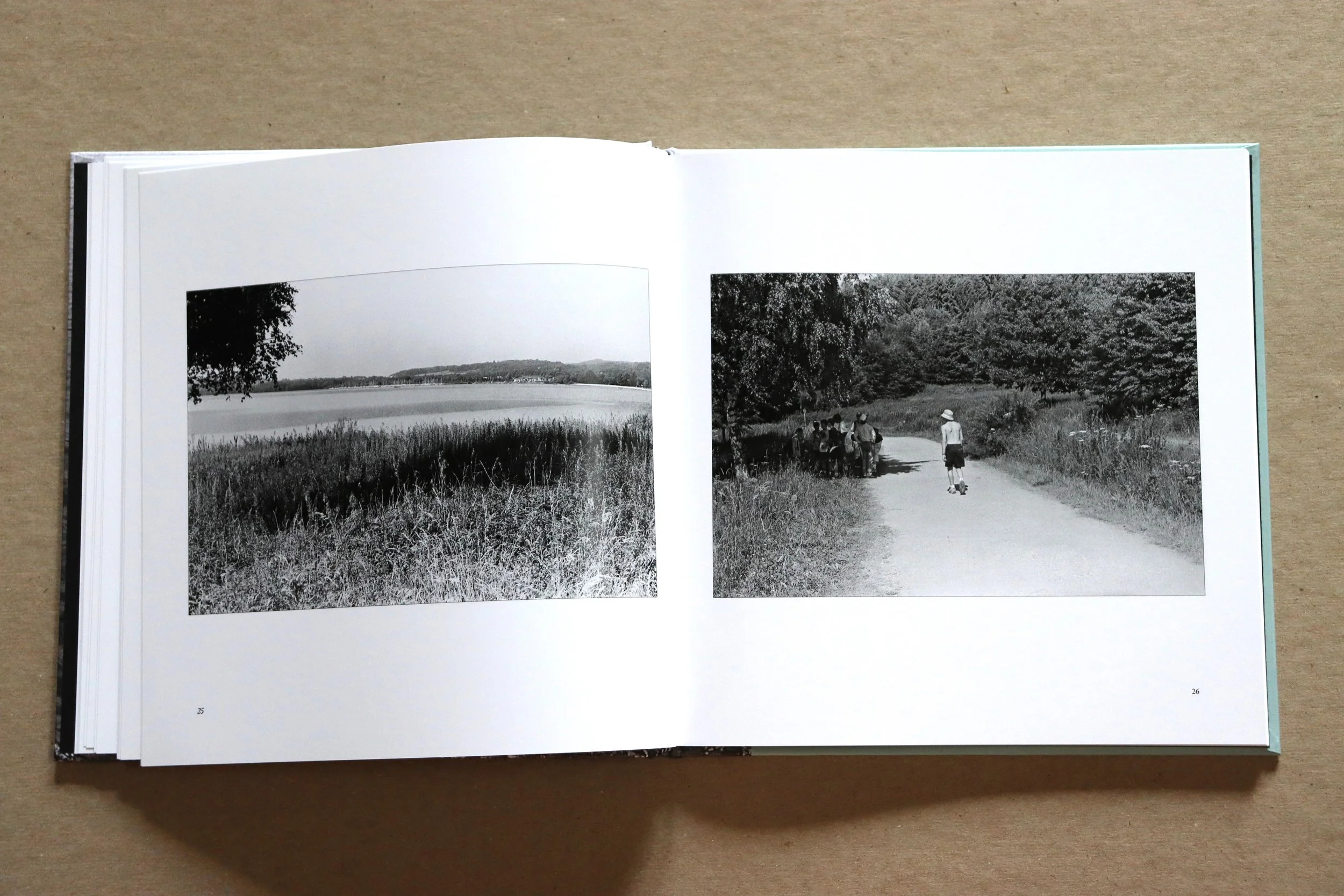
Some memories are intricate, while others, in contrast, are as pleasant as a sun-drenched summer day by a lake. Hans accomplishes what appears to be a straightforward yet potentially complex task: recording our recollections of childhood events through photographs and text.
I share Hans's belief that these students will remember their day at the lake. This book effectively accomplishes its goal of creating a personal poetics of lived experience from start to finish, compelling readers to contemplate the indistinct memories of the interior, a setting reminiscent of a sunny summer haze, all within A Day at the Lake.