

Tristan Duke
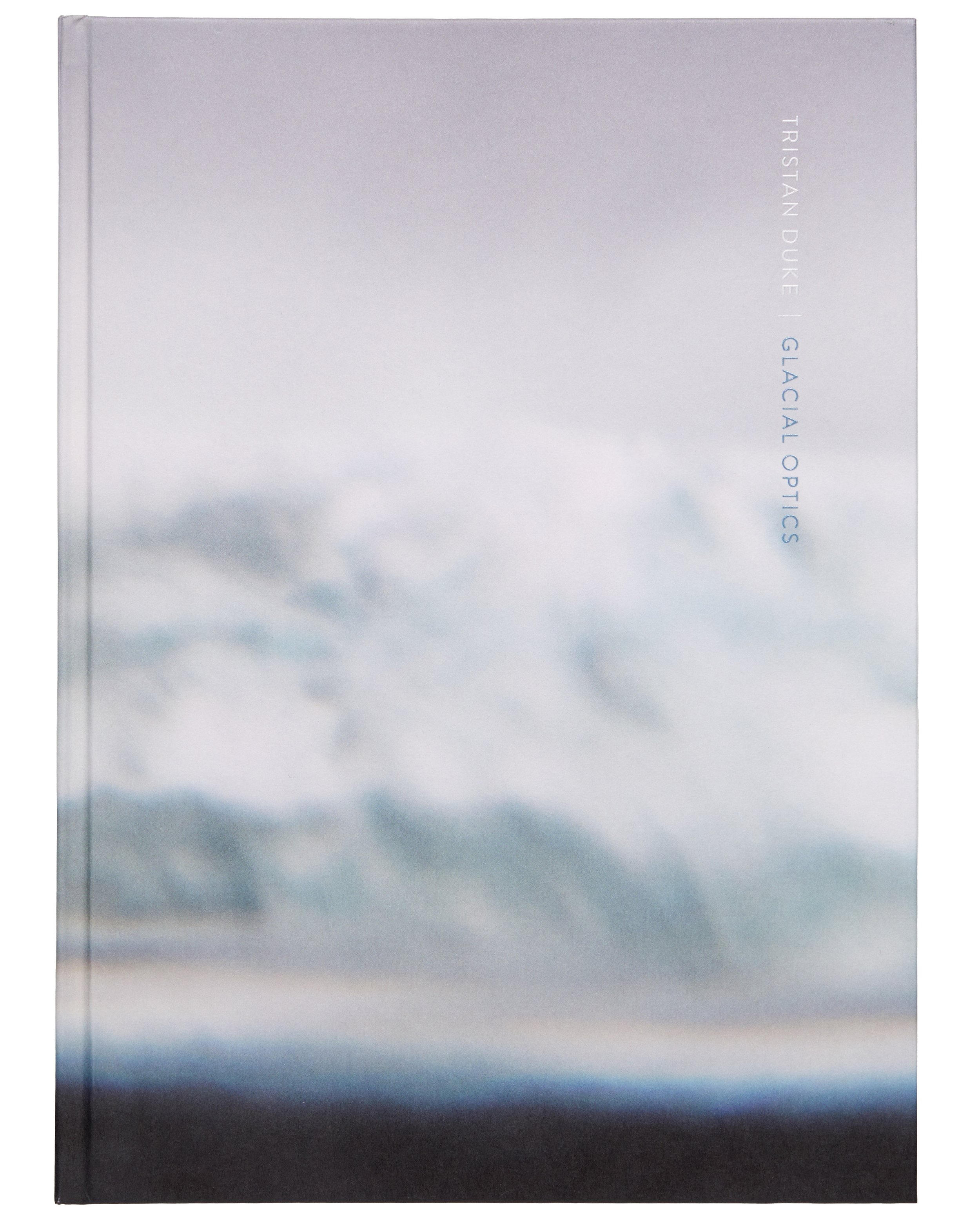
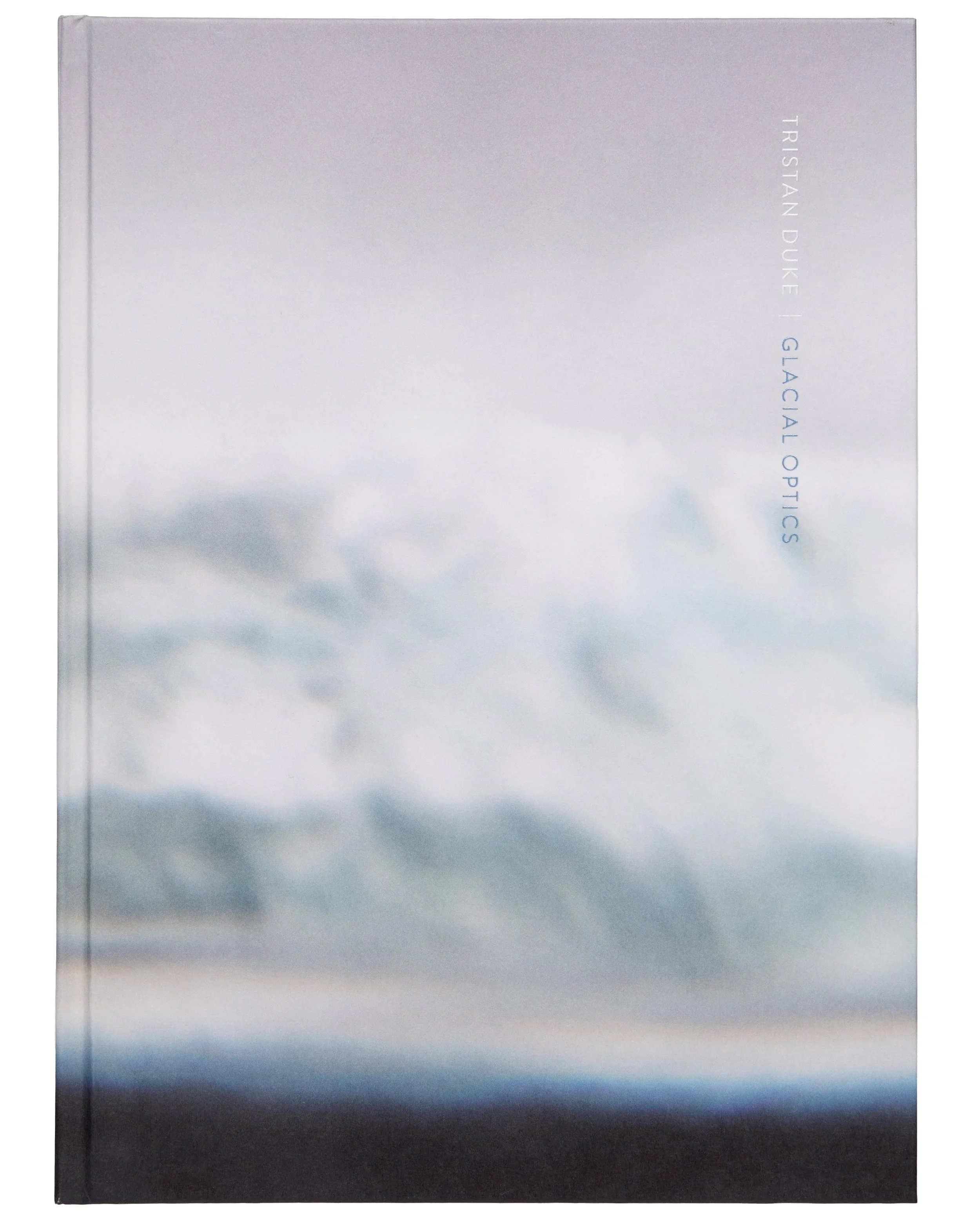
Tristan Duke
Glacial Optics
Hardcover
9 x 12.5 inches
180 pages / 90 images
Radius Books
About the Book:
Using camera lenses made of Arctic ice, Tristan Duke's ongoing, experimental photographic project, Glacial Optics, explores our current moment of climate crisis.
In the spring of 2022, artist Tristan Duke set sail for the Arctic Island of Svalbard, the fastest-warming place on the planet. His goal was to craft functioning camera lenses from the very ice of the glaciers. Through melting ice lenses, Duke captured portraits of an Arctic landscape in quiet turmoil. These ephemeral lenses became the foundation for a photographic series imagining the "gaze of the glacier" as a means of confronting the global climate emergency.
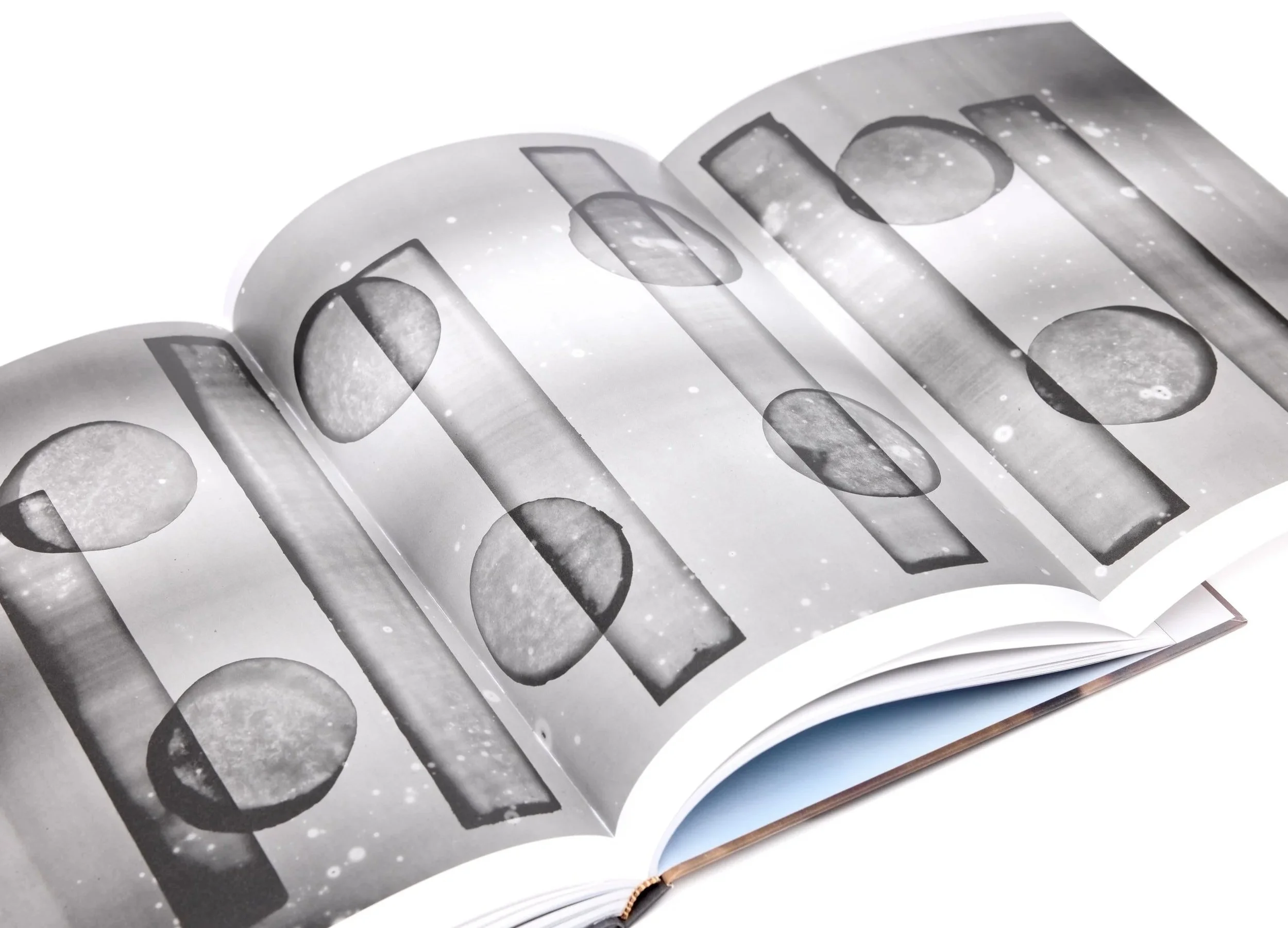
On returning from the Arctic, Duke turned his ice-lens camera to document massive wildfires raging across the American West — bringing the melting glaciers to bear witness to the smoke and fire of the Anthropocene. Next, Duke traveled the US, visiting labs where scientists study glacier ice for clues to better predict our climate future. By laying ice core samples directly on large sheets of photo paper, Duke created photograms, distilling the concept of the ice lens into formal studies of light moving through ice.
Glacial Optics includes essays by Lucy R. Lippard, Mark Cheetham, William L. Fox, and Brandee Caoba, with a foreword from Michael Govan, as well as the artist's field notes and original research chronicling the unlikely history of ice lenses.
Book review by Max Cavitch |
Some say the world will end in fire,
Some say in ice.
From what I've tasted of desire
I hold with those who favor fire.
But if it had to perish twice,
I think I know enough of hate
To know that for destruction ice
Is also great
And would suffice.
—Robert Frost, “Fire and Ice” (1920)
Contemporary photographers like Nick Brandt, Edward Burtynsky, Tina Freeman, Josh Haner, and Gideon Mendel often go to great lengths to produce dramatic and sobering images of human-driven environmental calamity. Among them, conceptual artist Tristan Duke has not only traveled far but has also invented a new image-making technique.
Instead of relying on conventional photographic equipment to depict the dwindling glaciers of the Arctic Ocean, in the book’s first section Duke has used glacial ice itself to fashion the lens through which he documents its disappearance. And because the warming effects responsible for glacial subsidencealso trigger the wildfires that continue to rage across the western United States, Duke has employed the same paleocrystic technology in the second section of the book to document that sharply contrasting form of environmental devastation.
In the book’s third and final section, Duke travels to the National Science Foundation’s sub-zero Ice Core Facility, where he makes eerie gelatin silver photograms of core samples—some dating back millions of years.
Book photo credit Brad Trone, courtesy Radius Books
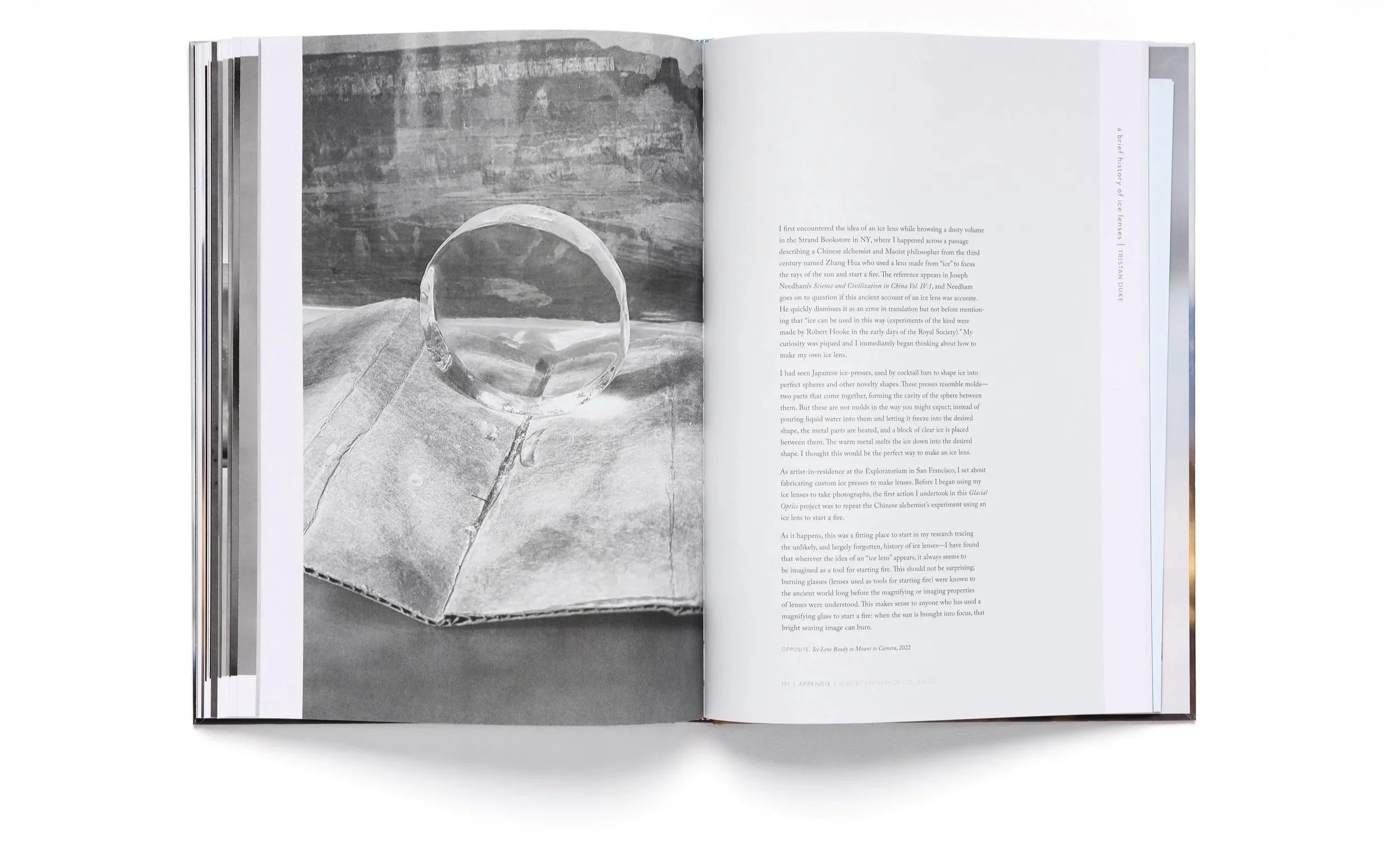
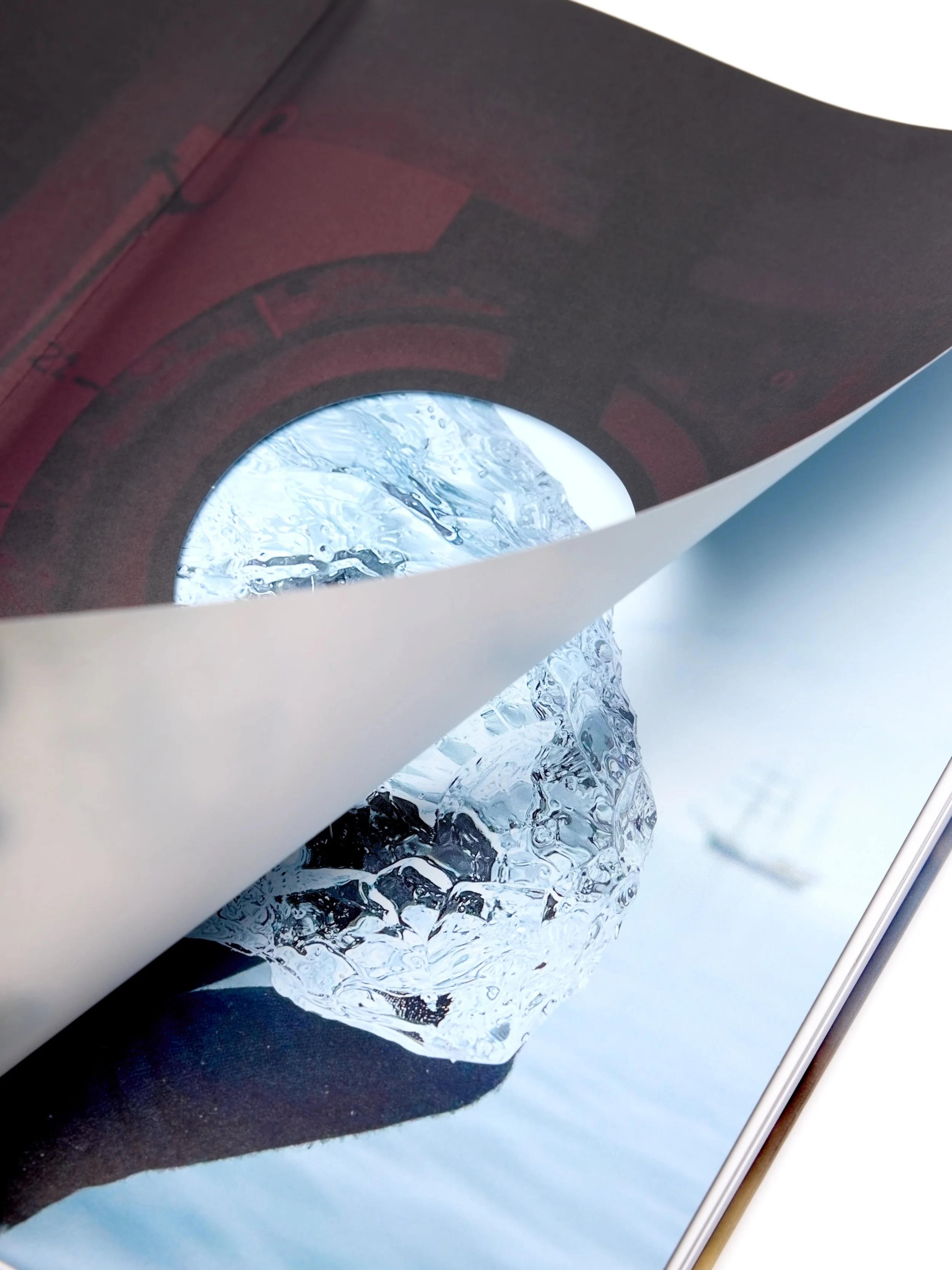
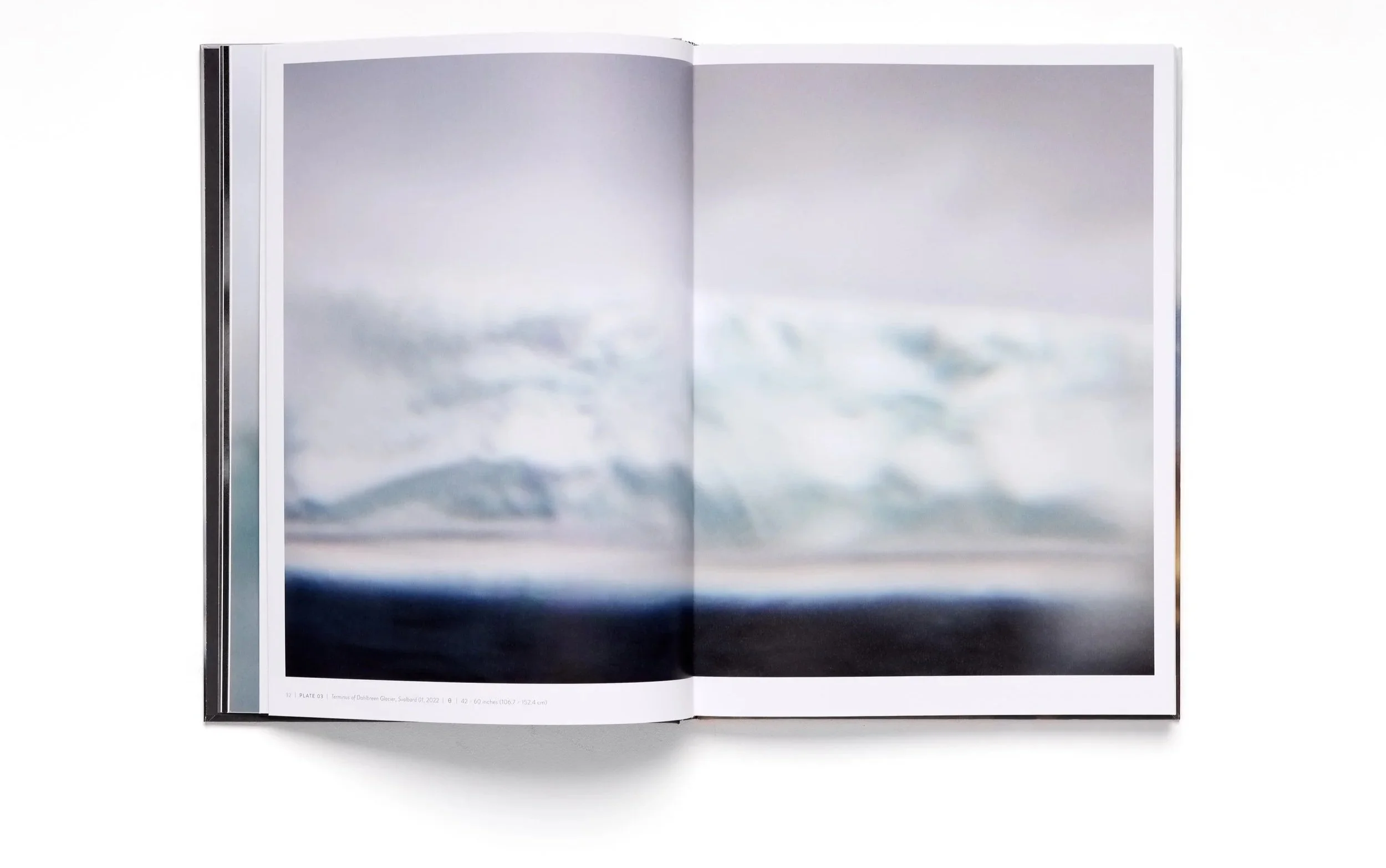
Before Duke first set out for the frigid waters of the Barents Sea, he researched “the crystal and refractive properties of ice,” used a computer to model “the way light moves through ice…to generate optimized curvatures for ice lenses,” and designed “special cameras equipped to hold these slippery, melting lenses and record images through them” (p. 19). Once he’d reached the Svalbard Archipelago—Norway’s northernmost islands, barely 800 miles from the North Pole—Duke sourced directly from its waters the exceptionally hard, clear ice he’d taught himself to carve into lenses. Once they were affixed to his makeshift “camera tents”—built to accommodatehuge, 42-x-100-inch paper negatives—Duke found that his ice lenses worked best when they themselves were starting to liquefy, yielding soft-hued photographs of glistening glacial landscapes seen through the same melting ice of which they’re composed.
Book photo credit Brad Trone, courtesy Radius Books
As Mark Cheetham points out in one of the book’s several contributor essays, “Duke’s images mirror those made in the Arctic over a century ago, sometimes directly, but more often through a technical and metaphorical inversion in his bespoke camera obscura” (p. 19). The images also harken back to a far more distant, prehistoric past, when ice covered most of the planet and when the industrial revolution, of which photography was a part, lay in the inconceivably distant future—a future that has become our pyromaniacal, carbon-belching present.
Book photo credit Brad Trone, courtesy Radius Books
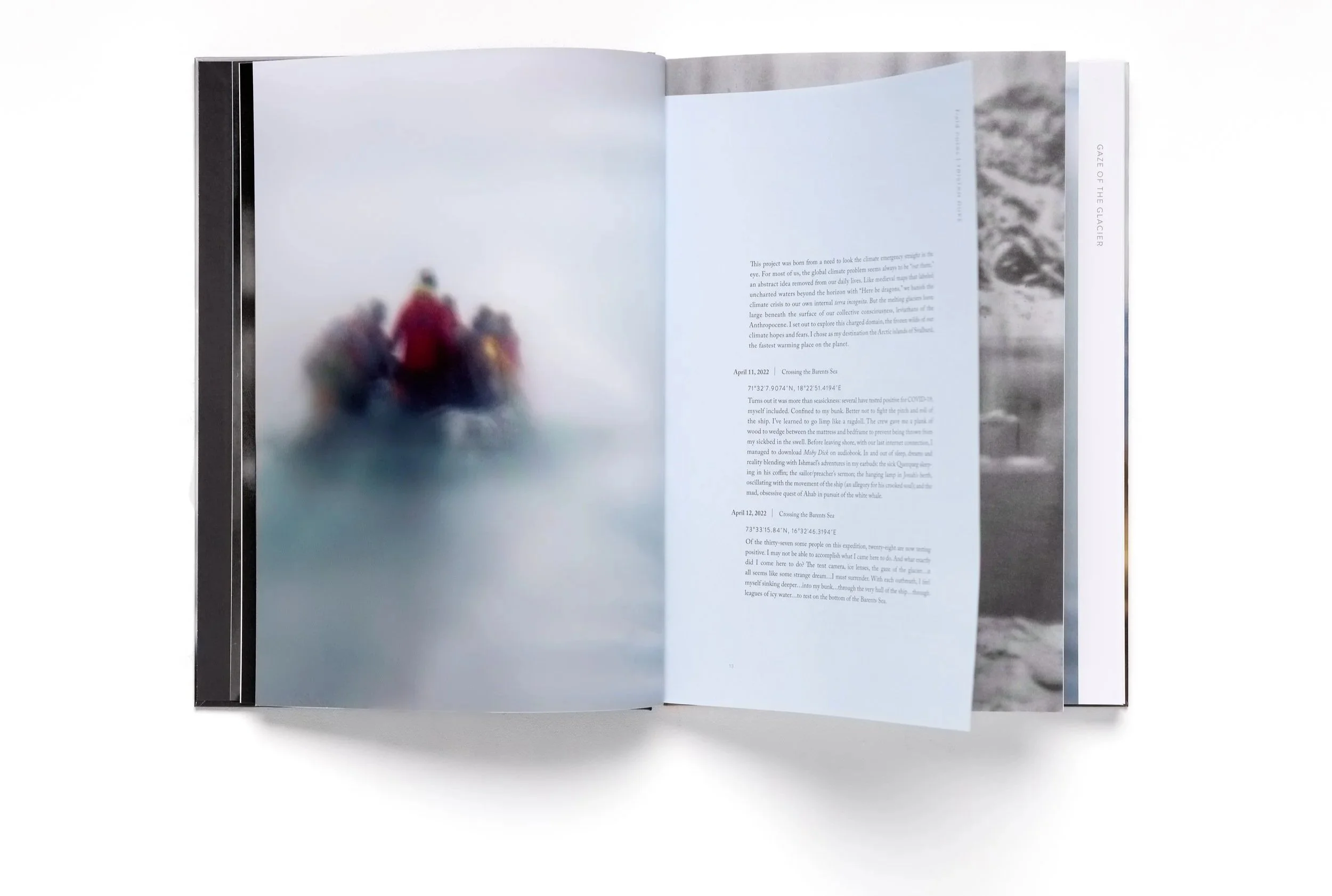
In one set of the “Field Notes” interspersed throughout the book, Duke writes that “upon returning from the Arctic, I set about documenting wildfires across the American West. From a climate perspective, the rapidly warming poles have quite a bit to do with record temperatures, unprecedented droughts, and increasingly common wildfires the world over.
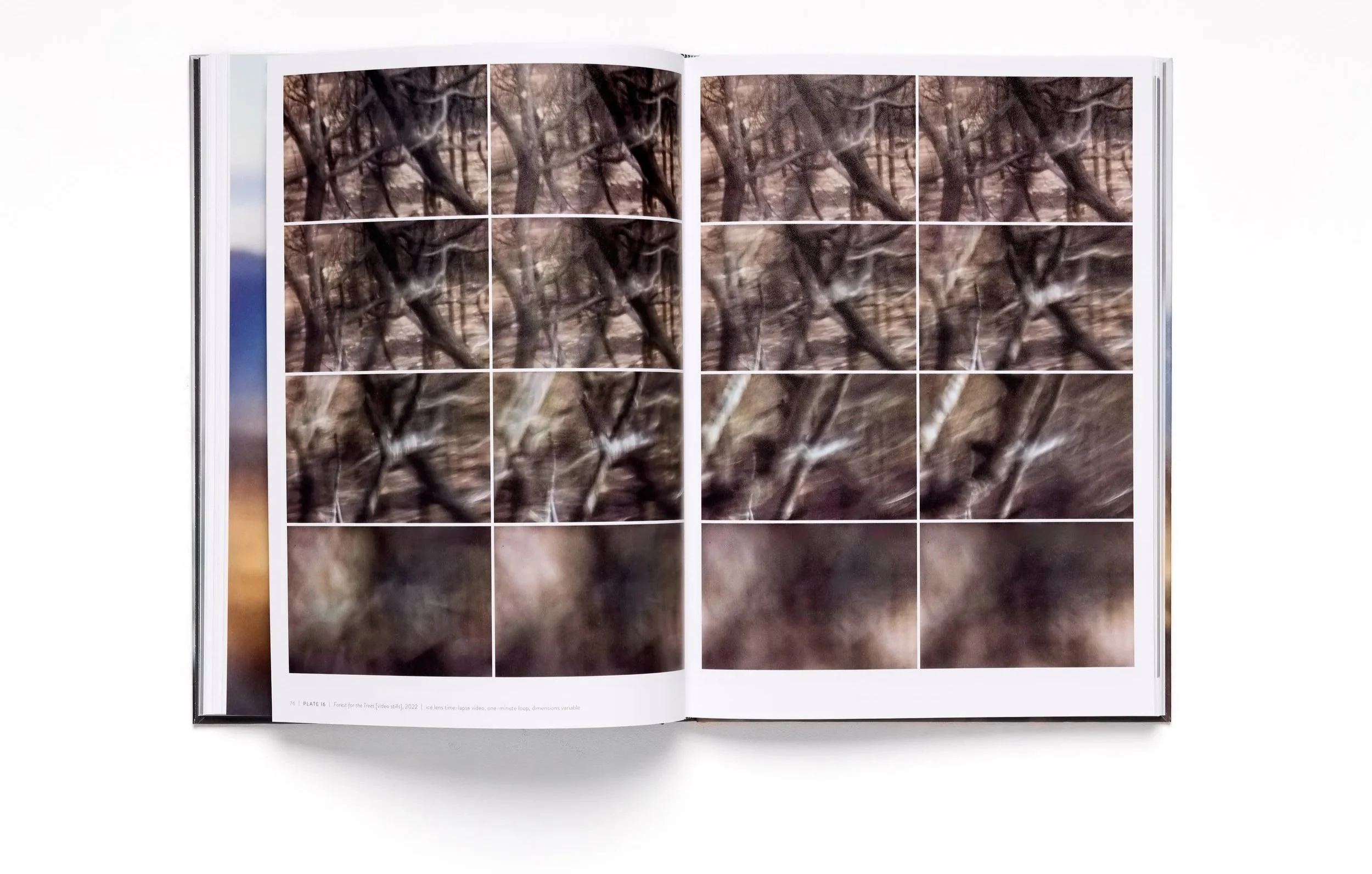
Now I would bring the gaze of the glacier to bear witness to the smoke and fire of the Anthropocene” (p. 59). It’s not hard to imagine how much more quickly Duke’s delicate ice lenses would deliquesce as he used them to shoot both still and moving images in scorched hills and canyons from Colorado toCalifornia. A two-page spread of video-stills captures this process of liquefaction. (At Duke’s Web site, readers of the book can watch videos, linked here, of the artist working with his ice lenses and camera tents in both the Arctic and the American West).
Book photo credit Brad Trone, courtesy Radius Books
Of the book’s many haunting images, none are more strangely evocative than the ice-core photograms of the third section, which not only harken back to the modernist photograms of Man Ray and Imogen Cunningham, but also conjure a sense of the inconceivable span of geological time.
They also resonate strongly with Duke’s larger body of work, with its relentless focus on questions of scale: temporal, geographical, and technological. As part of this scientifico-artistic oeuvre, Glacial Optics stretches beyond the limits of the conventional codex in various ways, with multiple paper stocks, numerous fold-outs, an “Ice Lens Timeline,” and a 50-x-12-inch folded insert of Duke’s photogram (the original is eighteen feet long) of a wood and rawhide sled used to hunt meteorites on the Antarctic ice sheet—not to mention the promise of further well-crafted works to come from its publisher, Radius Books.
In addition to Cheetham’s essay, Glacial Optics includes a Foreword by Michael Govan and three more excellent essays by similarly renowned scholars and curators Brandee Caoba, William L. Fox, and Lucy Lippard, who not only comment thoughtfully on Glacial Optics but also situate it within Duke’s far-ranging and singularly inventive practice.
Book photo credit Brad Trone, courtesy Radius Books
Book photo credit Brad Trone, courtesy Radius Books