
Daria Nazarova

The time of water | The past of my family is connected with the places where the Rybinsk reservoir is now located. Between years 1937 and 1941 more than 130,000 people were forced to leave their properties. Stone and old houses were destroyed and burned, the rest were dismantled and transported to new places. Those who remained homeless were paid compensation, but the people had to find a new place to move to by themselves. Those, who couldn’t afford paying workers to disassemble and transfer their houses, had to sell them to Volgostroy for very cheap. Most people moved somewhere nearby and remained to live on the shore of the future sea. There were those who died, unable to survive the shocks, from cold, illness and poverty. In total, about 700 villages and villages were flooded, more than 50 churches, 3 monasteries, noble estates with surrounding territories, gardens and parks, the estate of Musin-Pushkin were destroyed. The whole city of Mologa went under the water.

I was drawn to these places, to find people who would tell about the flooding. Articles from the books were not enough, I needed live witnesses, those, who kept the stories of their relatives. I needed photos, documents, letters, evidence.

It is impossible to remain indifferent now, as it is impossible to change what happened. For a long time, there was a ban on Mologa’s topic and people were afraid to share information. Even when it became possible, the most remained silent. Soon there will be no one left to tell us about these events. cargocollective.com/nazarovadar

Kari Wehrs

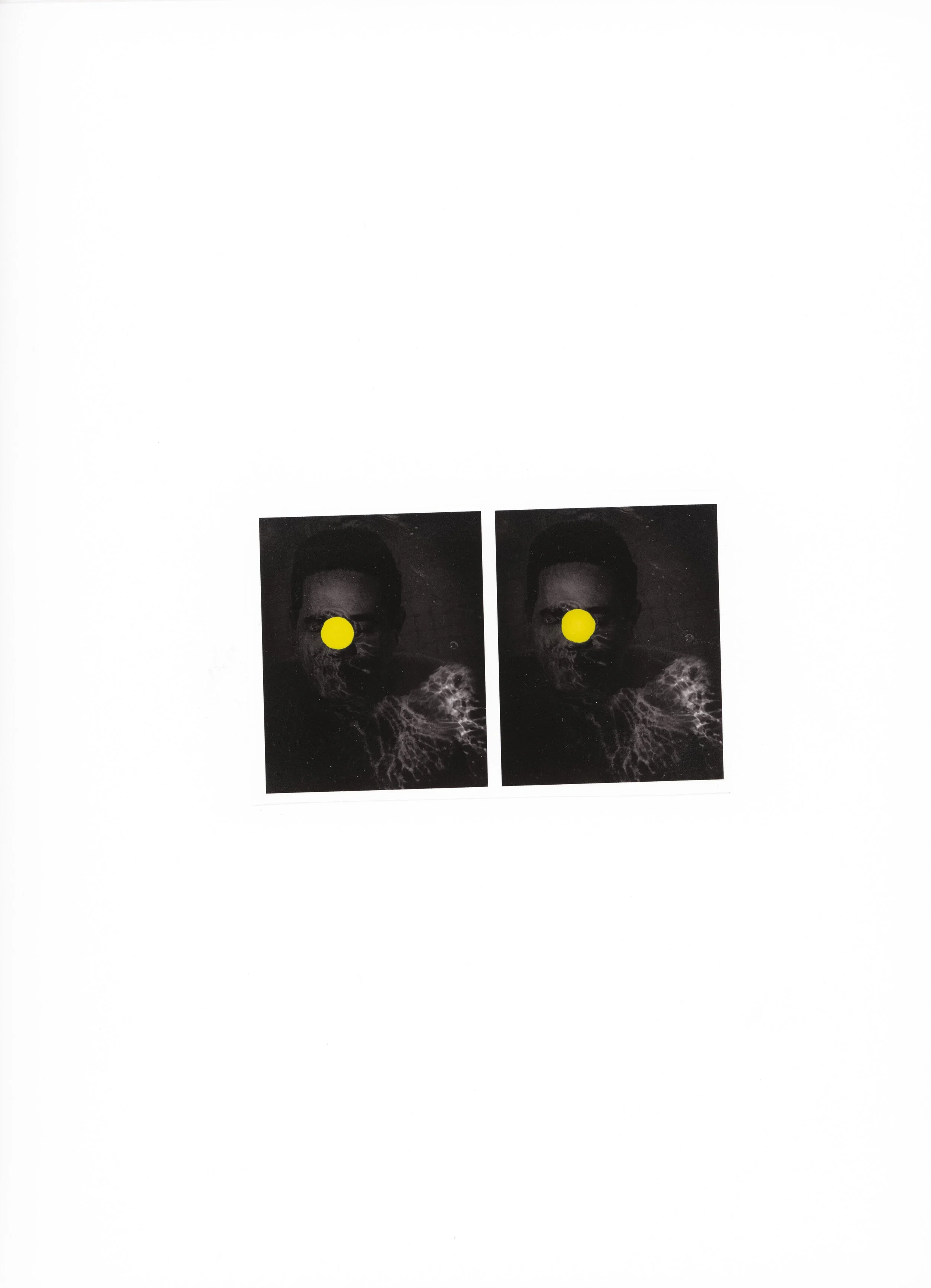
SHOT | From scenes of gun violence that make the national news, to my 61-year-old mother suddenly deciding to carry, incidents of gun use haunt me with curiosity and fear. Having no personal attachment to guns, I am grappling with present day societal reverberations and implications of the gun in American culture.

To create this series, I set up my darkroom tent and tintype gear at known target shooting locations in the Arizona desert. I meet gun enthusiast strangers and ask if they are willing to participate in my project. I create their tintype portraits, and when complete, I give them the option to use the image as target. Some take part – leaving bullet holes in the plate. “Shot” refers simultaneously to my use of the camera and the participant’s use of the gun.

Tintypes were the primary form of photography during the American Civil War –another time when the country exhibited vast divides. Soldiers often posed for their tintype in military uniform and with weaponry. My use of this form of photography in contemporary time elaborates on these connections to history.

I view this project as a method to investigate and provoke both personal and collective consciousness. How might we need to re-consider this time in our history? When do/did our rights become our burdens? How do we want to think of our social or political opposite, and how might crossing uncomfortable boundaries potentially lead to positive change? How do we freshen the all-too-often predictable “gun debate”, and instead pursue an exchange to reconcile our differences and move beyond our current impasse? www.kariwehrs.com

Maria Kapajeva

Dream Is Wonderful, Yet Unclear | Dream is Wonderful, Yet Unclear is a multi-layered and multi-disciplinary story of the relationships between collective and personal memories by looking at the community surrounding a textile mill in Narva, Estonia, now closed, of which Kapajeva's family was a part. The story of one small community is set in the larger context of post-industrial cities worldwide, as they seek new identities. It depicts a mill filled by powerful rhythms of looms and lively collectives of women workers that, in today’s competitive world seems like a bright and distant dream. Maria has focused on women, with a heightened sensitivity towards social and political matters in post-Soviet culture.

As the daughter of a textile designer, she spent her childhood at the mill, drawing fabric patterns and dreaming about the same job her mother had. She tries to interweave her mother’s work, her childhood dreams and their failures with the workers’ collective ones to underline the division between personal and collective memories that together form our historical narratives.

The title Dream is Wonderful, Yet Unclear is borrowed from the lyrics of March of Enthusiasts, from the Soviet movie The Bright Way (1940), starring Lyubov Orlova in the role of a female weaver, who made her ‘Cinderella’ journey from peasant to Stakhanovite, a heroic worker. This line of the song was later censored because of doubt raised by the word ‘unclear’. The idea of a wonderful dream is intended as a common thread throughout the book but so too is the lack of clarity that characterizes our memories of the past.

The book is currently in process and has an Indiegogo campaign to help support it’s production. If you are willing and able support the book by donating in the link here.

Joseph Horton

Terrain Vague | The British countryside has been regarded as a retreat for many, seen as an escape from the constructed urban environment and a place of contemplation. However, this reflection is not wholly relatable as for its inhabitants these spaces present conflict between ideology and reality. Along our border lands two coexisting identities can be found, creating a space which is not easily defined. Formerly attributed to the hardships of industrial closure the south Wales landscape sits alongside traditional pastoral visions associated with Britain. The divide is a ‘trunk’ road which joins England and Wales, whilst forming an unofficial border between rural and industrial South Wales. Its creation has been continually developed since the early 00’s and has seen further development with the help of European funding. Interested in exploring the complex social and cultural identity of this road I sought to inject a contemporary view of reflective and open imagery which, in my view, can be seen in documentary photography today; lyrical, ambiguous and ‘post-truth’.

Working within a political landscape, as photographers, the creation of work for the cause of political comment versus that which speaks within political climates is a hard discussion to disentangle. This, for me, is where photography allows us to begin to unravel the complexities of cultural and political identities. The project attaches an ambiguity toward its subjects, one that gives space to think and from it, we find a balance between evidence and lyricism; it is in this dialogue that the work was made. The area in question is a web of rural, non-rural, urban, suburban sectors all of which have boundaries which blur into each other. Who we are and how we think these places look still remain and are easily found but if you look closer at their makeup and the surrounding spaces you get a sense of the messy truth which builds this picture. Attracted to the political and cultural notions attached to the road I looked to its surrounding space finding solitude in a transitory environment. So the work has become more of a reaction to that, seeking out scenes in the world which represent this feeling. It does not serve to illustrate the roads completion and history, but to explore how it as an object can talk about our relationship to travel and the micro climates that build our complex rural spaces.

The project can be seen as an investigation into national/cultural identity and a quickly changing landscape but more deeply it is a reaction to ‘landscape’, and specifically how it has been historically represented. It is important that representation from across our country is understood with the depth and understanding that transcends pictures of fields. Those areas which carry the most weight are often the most overlooked, hidden in the everyday and familiar. joseph-horton.com

Laura Chen

Finders Keepers | Once commonplace in every home, the photo album was used to commemorate and storage family history, covering every aspect of life from birth to death. The pages tell stories that hold a little bit of each of us within them.

Finders Keepers is a body of work that explores my interest in vernacular photography and image appropriation. The decision to work with found images comes forth from the aspiration of wanting to see what I can do with photographs that I have not taken myself. It seemed to me the ideal challenge to create something new with ready-made materials —in this case images from exposed, undeveloped rolls of film which I found at antique markets and purchased online from eBay. I have enabled images that were once hidden inside film canisters to come to the surface, providing them a second chance to exist.

The moment I take ownership of the negatives, their meaning undergoes a change. As the collector, I become the artist and curator, using the photographs themselves as a medium. With their original context long forgotten, we are left with images full of curiosity, enhanced by the kitschiness of fashion styles and designs of days gone by. I will never know exactly what the photographs are about, what or who they show me, neither why they were taken in the first place. After all, I was not the one to press the shutter. I had no control over any technical and visual qualities, how the images were composed or lit. I had no input or say about what was left in- or outside of the picture frame. But it is exactly this —all these elements that make the images the way they are— that motivates me to come up with creative approaches to realise my vision and transform them into something of my own.

Each montage is made up from many individual details, extracted from many different photographs. Essentially what I am doing is similar to set building or scenic construction. I am interested in pictures that make you question what you are seeing, that compel the viewer to narrate what they think is happening. During this process of merging, the images begin to present photographic accounts of places, people and things that would have otherwise never been put in relation to one another. The outcome: restaged family events and alternative memories for a family photo album. The pages are filled with pictures you wouldn’t normally see and/or include; the mistakes, the imperfections, the unusual. I am fascinated by the idea that the unknown owners and creators of these photographs would have probably never expected to see them presented this way. www.laura-chen.com

Pola Rader

Icon and Mirror | Russian Orthodox Christians is sceptical about feminism. In the world of Orthodoxy women still play a clearly defined role. Today the own tradition requires from the Orthodox women a critical reflection. Orthodoxy requires a woman to be humble and this humility is reflected in all areas of life. I think that this is a cornerstone in the image of an orthodox woman, a source of her power and her Achilles heel at the same time.

These ideas were the starting point in my project “Icon and mirror”. I decided to meet different orthodox female activists and active churchgoers, to talk to them, to have a look into their lives and to see how they feel about their position in the church today.

For me, the values brought by Christ have been always more of the female nature. Softness, mercy, love, forgiveness, healing, caregiving are typical female qualities to me. I think that Russian religiosity has shifted the focus of attention from Christ to the Virgin, making her the one to embody these best Christian virtues. Working on “Icon and mirror” I was especially interested in a huge gap between an idol made of a woman in the form of the Virgin and real treatment of a real woman.

The protagonists of this project are active churchgoers, but not feminist activists. They live out the role of the Orthodox woman and shine in their own shadow. The highly respected spiritual qualities and values of the Mother of God are lived on by the Orthodox women: not to be proud and to have humility, to endure the sufferings patiently. polarader.com

Carolina Dutca

Nonna | Nonna noun [ feminine ] /'nɔnːa/ grandmother, grandma, granny

Nonna, you didn't like being called a grandmother. You have always been a big kid, even after you are seventy years old. You had cancer twice in your bright life. Knowing about this diagnosis, you actively traveled, traveled around almost the whole of Europe. But you made your last trip alone. You wanted before your death someone was near. I held your hand in intensive care when the liver failure took over and you had only a few hours to live. The last thing I heard was: "Let me go." There were moments when you felt too lonely, despite your close ones. After your death I found your diary. There were moments when it seemed that you love this life like no other, while at others you did not leave the house for weeks, absorbed in apathy.

At home alone you made earrings from old beads, once brought from abroad. Immediately after your death, I took both earrings and beads for them. I began to wear these earrings and continued to create new ones. At your funeral, I decided to throw one of them into the grave, because I was very afraid of losing our connection. Since then, I wear an earring in one ear only.

We are born and die alone, but I still see you in dreams. You asked me to look at the sky more often after your death. In these moments, I can always hear your voice.

Are you still in my heart

Your Caroline. dutcarolina.tilda.ws

Robin Michals

Our Neighborhood | Our Neighborhood juxtaposes sites of daily life with the infrastructure of industrial production or as Jedediah Britton-Purdy writing recently in the NYT has called it, “ the technological exoskeleton for the species.” If you live near a factory or refinery, you hear it, you smell it, you know in your min it is dangerous but you accept all that because either you have no choice or it is your best choice. Either your grandfather built the house when he immigrated from Mexico or this neighborhood is actually better than some others you can afford. You are resigned to the dangers that threaten your future in exchange for having a roof over your head right now.

We all live in that house, that neighborhood. The Intergovernmental Panel on Climate Change issued a report last fall stating that the global temperature will rise 2.7 degrees Fahrenheit over pre-industrial levels by 2040, causing calamitous worldwide damage. The need to reduce CO2 emissions is on a direct collision course with the oil and gas industry which due to hydraulic fracturing is currently expanding. Our grandfathers built this house and really there is no where else to go. We are resigned to what the future brings. We feel grief for what is coming and what has been lost. There is now is a term for this: solastagia. www.e-arcades.com

Amandine Freyd

Les Mains Negatives | The negative hands of today are the same as in the past. The hot season is a cave whose walls call the origin. Wild life a wild life accommodated by the impression of the pickings and the inventory of the gestures.

The treasure hunt.

This enigma of summer that keeps coming back, but never resolves. Keep fragile memories, light leaves, flowers, thorns and others. The imperturbable heat that floats between black snakes and coffee cups.

Laboratory of the sun.

Ritual of the summer. amandinefreyd.wixsite.com

Camille Carbonaro

Appelez-moi Victoria | Appelez-moi Victoria is a visual archaeology that explores elements of memory, genealogy and exile. The project raises the more general questions on the above, taking the Italian immigration in France and its impact as a starting point. Camille Carbonaro addresses issues on self definition, the discovery of one’s own roots and indeed one’s own generational journey and what is meant by historical memory. She balances between reality and fiction between research and personal quest, on psychic and mystical levels, concerning her origins.

Camille Carbonaro creates a composition of elements assembled from children immigrants’ stories while exploring her own memories evaporated in time. Inspired by the theories of Alejandro Jodorowsky on psycho-genealogy and psycho-magic, she investigates out of focus and forgotten aspects of her family history. Appelez-moi Victoria is a hymn to tales and to roots, striped of patriotism and nationalism, which underlines issues of immigration, a rather sensitive and time relevant subject.

This project is about emotional legacy; it’s about a ritual passage which has left its signs, its marks, for future generations to witness but never live again.

Why abandon our roots on the border?

Children of exile, what will be our heritage?

This project is carried out as part of the Residence 1+2 Photography Sciences in Toulouse in 2018 and was published by Filigranes Editions in the collective book box L’Origine Manquante. https://camillecarbonaro.com/

Marian Crostic

SEA CHANGE | “The real voyage of discovery, “ says Marcel Proust, “consists not in seeking new landscapes, but in having new eyes.” His quote best summarizes my journey on the beaches of Venice, California.

This collection of work started with documenting my daily morning walks and what developed surprised me. When I began reviewing the images, a new story emerged. It was as if the beach, the horizons, and the water were telling me the story of my life.

Sea Change is an abstract vision of the water’s edge connecting liquid and solid. Soft in nature with emphasis on the graphic and non-linear patterns found in nature.

Haunting and meditative the series has taught me the importance of seeing ones own environment with a present, reflective and introspective eye.

The Sea | Sand | Salt series consists of 3 bodies of work all focusing on a different aspect of Venice Beach.

This work has been a life lesson for me in terms of how I see and interact with the world around me. www.mariancrostic.com

Dale Rothenberg

Flags of Convenience | Flags of Convenience is a photo-essay on cruise ships, from the perspective of the crew. It explores the historical develop-ment of labor practices that allow for the modern cruise industry to thrive and expand, and the consequences of these laws on an international workforce.

I worked on this project for four years as a crew member on various cruise ships around the world. It is something between a love letter and a scathing critique; it is partially documentary and partially political. It weaves together exerpts on Oriental-ism, crew amenities, and canal sizes; it draws focus to the immense growth of the physical size and actual amount of cruise ships to be produced in the coming years. www.dalerothenberg.com

Anna Ogier-Bloomer

Family Pictures | My work centers around the notion of voyeurism within American culture and contemporary family histories seen through the lives of my own family. By exposing our private, unsightly, and painful moments to the viewer, I allow passage into our experiences as a way to connect to the viewer’s own family life. The American obsession with an idealized view of family evokes fascination with the private and painful dysfunctions which make that ideal unattainable.


I grew up in Cincinnati, Ohio, a few minutes’ drive from the northern border of Kentucky. There is no single ordinary American domestic life, and my own family is complicated—a sometimes toxic mix of staunch liberals and conservatives, working-class and upper-middle class. My father, the doctor, never quite mixed with my mother’s working-class family. My mother, the matriarch holding the family together, faced a shattering betrayal later in life that revealed a marriage built on lies. My sister struggles as the youngest child to find her way, her true self. My grandfather carries a gun on his body at all times, reveling in his right to concealed carry.

These images do not speak for a universal family; they are an example of the many ways the family unit is defined. My work plays into our cultural need to uncover others‘ private lives. Going beyond the basic voyeuristic nature of photography, these images reveal the stories we all keep behind drawn curtains and closed doors. By accompanying my images with text, I bring the audience closer to a personal story. In following my subjects as I have for years, and will for years to come, I am able to create an ongoing narrative that combines the reality of my family’s struggles and existence with my own perception of that reality. www.annaogierbloomer.com

Michael Snyder

Darksome | The Scottish Highlands have a power to capture the imagination in a way that few places on this planet can.  Perched on the craggy edge of the North Atlantic, the Highlands instantly conjure up images of rocky precipices, lonely lochs, and rainswept moors.  And indeed, their reputation as one of the world’s great epicenters of gray and gloom is well earned.  Fort William, the largest town in the Western Highlands gets just over 1,000 hours of sunlight per year. 

By comparison, that is less than half of the annual sunlight hours of America’s most famous capital of rain, Seattle.  Further north than Siberia’s frozen Lake Baikal, windier than the steppe of Mongolia, wetter than London, and more sparsely populated than anywhere in mainland Europe, the Highlands are a destination for those who seek the solace of lonely spaces.  I lived in Scotland for four years and took many journeys to the Highlands, including a solo circumnavigation of the Scottish coastline by bike.  Darksome is an exploration of these spaces and a love letter to the quiet beauty of desolation and dismal wet.

 "This darksome burn, horseback brown,
His rollrock highroad roaring down,
In coop and in comb the fleece of his foam
Flutes and low to the lake falls home.

What would the world be, once bereft
Of wet and of wildness? Let them be left,
O let them be left, wildness and wet;
Long live the weeds and the wilderness yet." from Inversnaid by Gerard Manley Hopkins www.michaelosnyder.com

James Kuan

POTENTIAL SPACE | In human anatomy, “potential space” is the tension-heavy void between two adjacent surfaces pressing up against each other. In my own life, a similarly complicated space exists between my identity as an introvert, and my perceived need to be an  extrovert.

I created this series to represent my continued balancing of self-erasure and self-exposure.

As a surgeon, I cut, repair and reconstruct. Over the past few years, I’ve adopted a similar practice with my photography, incorporating collage, layering and abstraction to activate surface as a metaphor for absence and embodiment. www.jameskuanphoto.com

Sasha Bauer

Matryoshka Dolls | I have asked my mother to tell me about the similarities and differences she sees in me, her and my grandmother. I have learnt a lot about three of us from what she told me. When I have matched mother’s comments to the photos of our ways of life I have suddenly realised that my project turned into a search for similarities and differences, and that it is not so much about the answer, but about the search itself. 

It is hard to say now why I have chosen to photographically present the story about my grandmother, mother and myself. I live away from my family and despite of our regular and warm communication, at some point I stopped feeling the connection with them. I started noticing that my life is quite different from the ones of my mother and grandmother. But then I remembered that there is at least one thing we have in common: all three of us left our parent’s home at about the same age. 

My grandmother lives in the remote village that my mother left for a new life in the city. My mother lives in the small city that I left for a different life in the big city. Both my mother’s and grandmother’s husbands passed away untimely and their children grew up and left. 

Most of us have fears of repeating the life of our parents. We don’t want to be like them. I felt some sort of an excitement when I saw how much my mother and grandmother have in common. Then I got really interested in how honest I can be with myself when I compare my life to theirs… 

Since this project turned out to be very personal it became hard for me to have a logical analysis over the photographed material. For this reason I asked other people to give me a feedback on what they see in this work: 

You are everywhere there. It looks like you looking for your own traits in those people — in your mother and grandmother — to be exact, you are looking for what actually connects you all. Also I see the story of life repeating itself. The lives of three women in one family are similar and you all have a lot in common. © Ilya

Me: Are you afraid to be like mum? Sister: I guess, I am. I started noticing that I act like mum sometimes, and it scared me. But then I realised that we are family and it is just inevitable. We are different at some things and similar at others — and it is normal.

This is about you through the prism of our family history. © Mother 

I enjoy looking at these photographs. Just like you, I have a strong emotional connection with each picture. I saw all that many times and it is still very interesting. These photos give me a chance to take a detached view: to look at things with stranger’s eyes. © Sister Me: Here is the auto portrait and plates Yana (tutor): Good. Otherwise there was not much of you. Me: There is a lot of me. This is all me. Yana (tutor): Yes, yes. But only you and I know about it. sashabauer.com/en

Bootsy Holler

WITHOUT WORDS grounded in nature | Without Words is a visceral and subconscious way back to the self through nature.  Unable to articulate my personal struggle, these images bring visibility to my feelings of vulnerability, fear, and truth. These are moments manifested from my psyche, disembodied from my day to day existence. 

The spark for this series came from an illuminating moment in Savannah when I found myself alone in the humid night air. I walked to the railing of the deck and looked out to see my body face down in the pool below.  I didn’t know it then, but the feeling of detachment, and the  experience in that moment would follow me through the next few years.

Nature, in its complexity, its sense of survival, and its inherent beauty, helped me return back to my body. When I dug into the earth, felt the sea and the wind, and connected to the essence of myself, I found a way back home.  www.bootsyholler.com

Kristine Heykants

Heykants – American Beauty | It was the summer of 1993 and I had just returned to the US after living overseas for two years. I landed in Iowa and was studying photography. Roaming back-country roads in search of subjects that resonated with my new-found outsider’s perspective on my homeland, I was also exploring ideas about the value of women.

After happening upon a circus performance, I was attracted to the county fair and rodeo queen pageants that populate in the rural countryside in summer. They distilled my personal sense of indoctrination for consumption by the male gaze, and I could identify with a desire for validation.

At the time, I was looking at Diane Arbus’ iconoclastic portraits that revealed the humanity and frailty of her subjects. In this vein, American Beauty documents popular events at the intersection of women and the judgement of beauty. kristineheykants.com

Wong Wei-him

’Hong Kong, somewhere in-between’ | captures the insignificant parts of my city, and the arrangement of things that remind us both the unpredictability and imperfection of life. Being an architect, my work shapes how people work and live, but this is just the very beginning. In time, the city and the citizens evolve what architects and designers have created in forms of addition or subtraction. Most of these changes are unaesthetic, sometimes unintentional and most of the time unforeseeable.

I am interested in these phenomenon. Photography allows me to record these changes over time. It is an art form about observation of our society. www.wongweihim.com