



Emil Gataullin
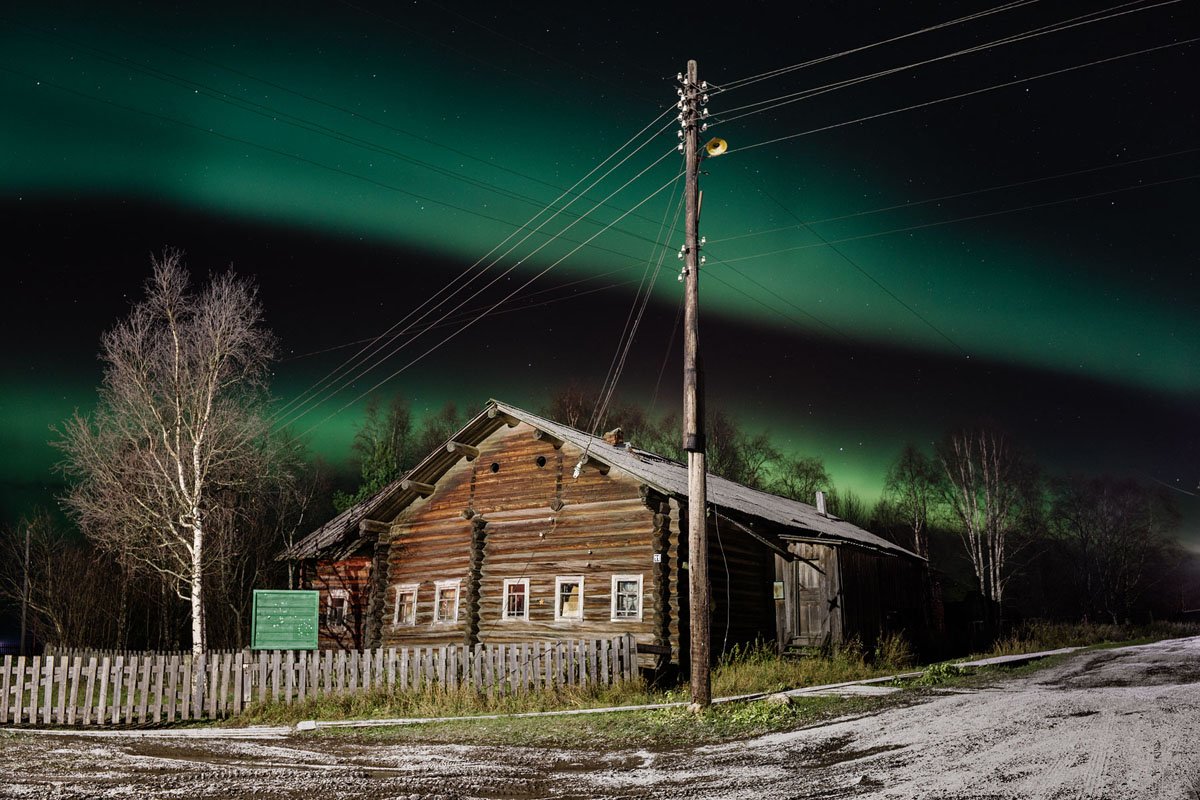
Mezen: By Sky’s Edge | “Here is a door behind which the hidden is revealed, enter and you will see not what one wants to see but what is” — writing on a big wooden cross, Kuloy village, Arkhangelsk region, Russia.This series speaks about the fate of Russian northern villages following the fall of the Soviet Union. The passing, the disappearance and fading of a rural way of life, and the challenges faced by locals in their efforts to adapt to a harsh modern reality.
The Mezen River in the north of Russia is 966 kilometers long and passes through the Komi Republic and the Arkhangelsk region, before finally flowing into the White Sea. It freezes in October and thaws in April. Villages and settlements are strung out along its banks like memories of days long gone. Time in the Mezen villages seems to have stood still, with its backdrop of centuries-old wooden cabins, ruined churches, and archaic crosses; people talk more about former times than about the here and now; the past seems more real than the present.
With the collapse of the USSR in the early 1990's state support for agriculture was reduced almost tenfold, and the villages gradually started to die. Many people lost their jobs, and many of them moved away from the settlements. Those who remain behind take care of themselves, just as their ancestors did for centuries before them: they bake, they hunt, and they fish. They feel abandoned, and live in a state of timelessness, somewhere caught between a past lost forever and an uncertain future. Far from the big cities and cultural life, the present shimmers like an inaccessible star — somewhere out there, on television or in the pages of a magazine.
I first learned about the region at the end of the nineties. I was studying at the Surikov Moscow Institute of Art at the time and discovered the Russian painter Viktor Popkov and his renowned “The Widows of Mezen” series. It reveals boats by steep banks, large log cabins, and old women in red clothing. These paintings awoke my interest in life in the Russian provinces, at the edges of society. This comer of the world called to me for many years, but it always seemed too far away and inaccessible. However, in the summer of 2017, I finally found myself there — and the Mezen has had a hold on me ever since. That marked the beginning of a long-term project through which I returned to the Mezen several times, visited more than 50 villages where I lived with the locals, immersed in their everyday. www.emilgataullin.com

A man prepares a small ferry (home built raft fitting one car, powered by a motorboat) for carrying cars across the Mezen River. There are almost no bridges in the region. Near Vozhgora village, Arkhangelsk region, Russia, 2017.

A man repairs his car on a bridge over the Mezen River. Near Usogorsk village, Komi Republic, Russia, 2017.

An old woman walks past a roadside cross. Leshukonskoe village, Arkhangelsk region, Russia, 2017.

Maria Nikolaevna Moiseenko, 78 years old, stands with a home-made fishing rod on the banks of the Mezen River. Near Smolenets village, Arkhangelsk region, Russia, 2017.

An abandoned car with old church ruins in the background. Glotovo village, Komi Republic, Russia, 2018.

A teacher walks home after school past old church ruins. Glotovo village, Komi Republic, Russia, 2018.

A special breed of horses, Mezen horse, was bred in the Mezen River valley. These horses are suitable for difficult work and easily survive cold winters. Dolgoshchelye village, Arkhangelsk region, Russia, 2019.

A local boy rides his motorbike. Dolgoshchelye village, Arkhangelsk region, Russia, 2019.


A girl with a bouquet of flowers sits in front of the entrance to the playground. Kamenka village, Arkhangelsk region, Russia, 2019.

Cows roam the village streets unattended, they are driven home only in late evenings. Leshukonskoe village, Arkhangelsk region, Russia, 2017.


USSR era kindergarten playground with a wooden rocket. Vozhgora village, Arkhangelsk region, Russia, 2017.


A man rests by a shed after having a drink. Leshukonskoe village, Arkhangelsk region, Russia, 2017.


Kids and their teachers build a snow fortress in the schoolyard. Ust-Chulasa village, Arkhangelsk region, Russia, 2018.

A telegraph-pole cut for firewood by locals. Between Rusoma and Chulasa villages, Arkhangelsk region, Russia, 2018.

Vladimir is a master of traditional Mezen wooden boat building. This boat, already the forty-seventh in a row, he made in two weeks. Chuprovo village, Komi Republic, Russia, 2020.

A dome of a destroyed chapel stands in an old rural graveyard. Koptyuga village, Komi Republic, Russia, 2020.

Nina Mikhailovna Davydova, 80, old believer poses in her house. Chuprovo village, Komi Republic, Russia, 2020.

Sisters Lera and Katya leaning on the fence of their house. Vazhgort village, Komi Republic, Russia, 2020.

