


Ying Ang
Based in Melbourne, Australia, Ying Ang is a photographer and author with an extensive exhibition history and client base, having lived and worked in Singapore, Sydney and New York City. She is part of the teaching faculty at the International Center of Photography (NY), the Director of Reflexions 2.0, and a board member of the Centre for Contemporary Photography (Melbourne).
Ying was also the co-founder and head curator of Le Space Gallery 2019–2024. Her two self-published artist books, Gold Coast (2014) and The Quickening (2021) garnered international critical acclaim, and were awarded and shortlisted for various high-profile prizes, including the New York Photo Festival and Encontros Da Imagem book prize, the Belfast Photo Festival 2021 book prize, the Tokyo International Foto Awards and the Prix Pictet award. Ying was a commissioned artist for PHOTO2022 International Festival of Photography and will exhibit at the 2025 Rencontres d’Arles festival in Arles, France.
© Ying Ang / Perimeter Editions
ISBN 978-1-922545-44-2
Published by Perimeter Editions
Otabind, softcover, 23 x 27 cm, 160 Pages
Interview by Dana Stirling
You’ve said this project grew out of very ordinary walks in the city. Can you take us back to a mushroom encounter where you first felt there was something more there than “just” photographing a mushroom. When did you understand this was a bigger subject matter for you?
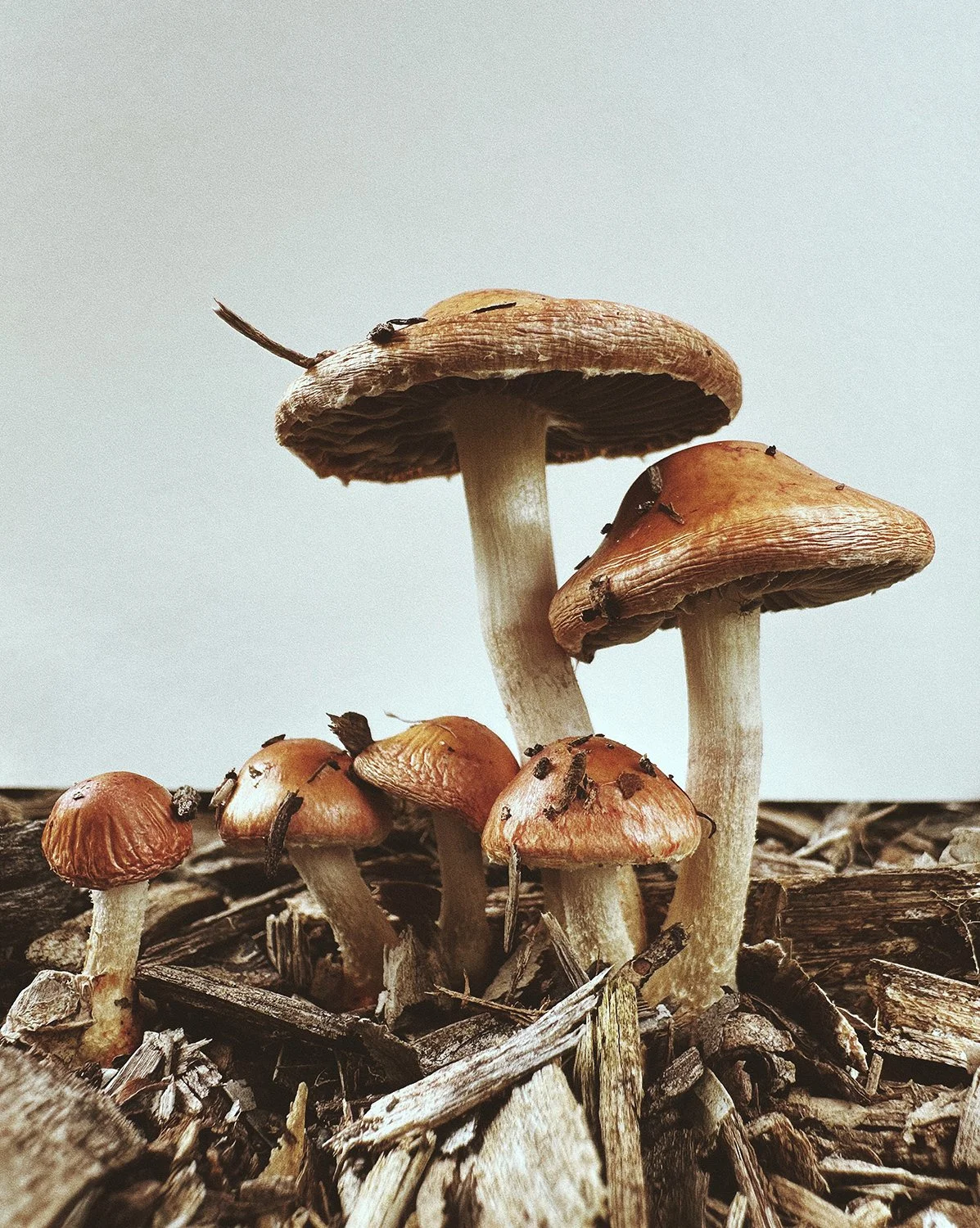
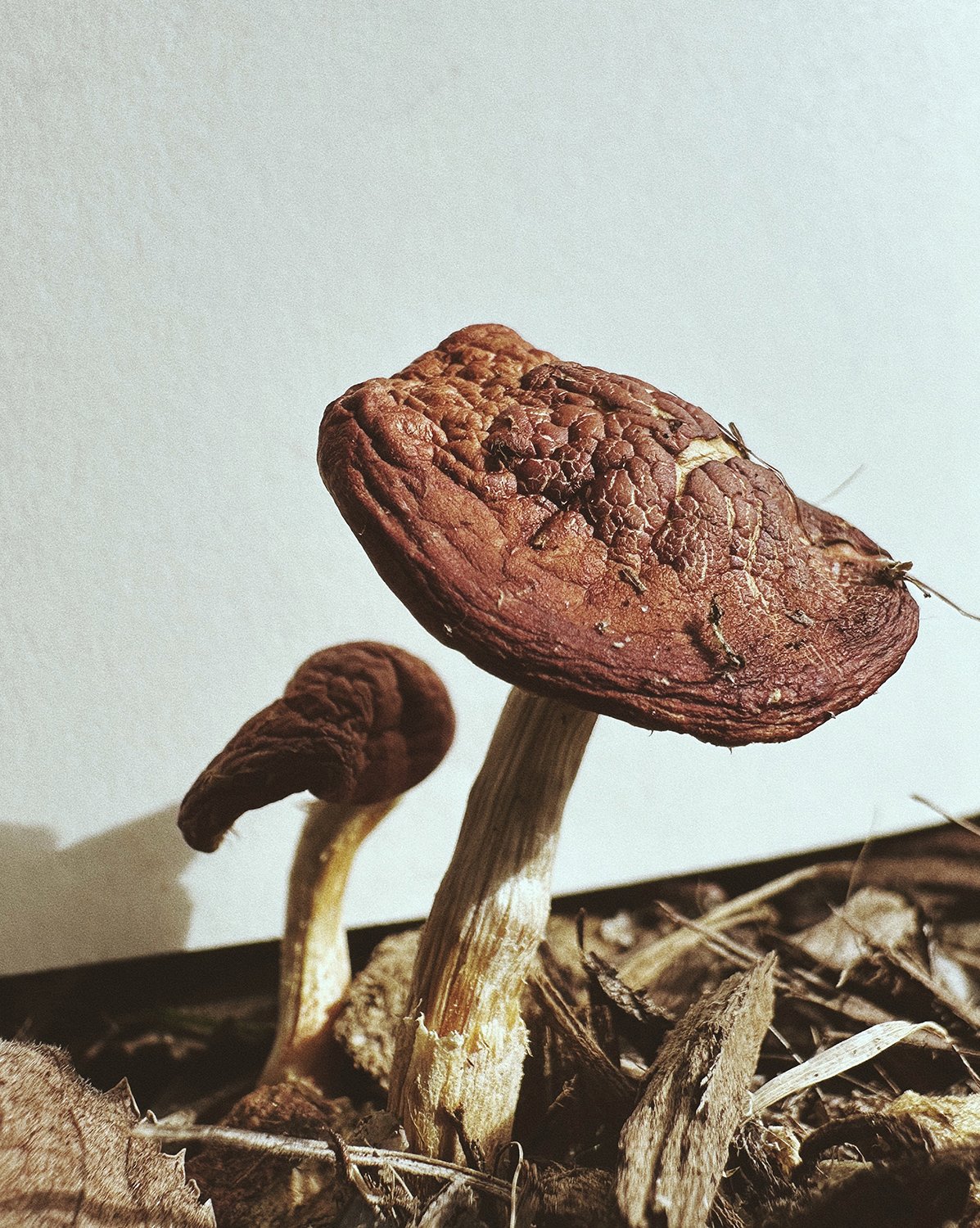
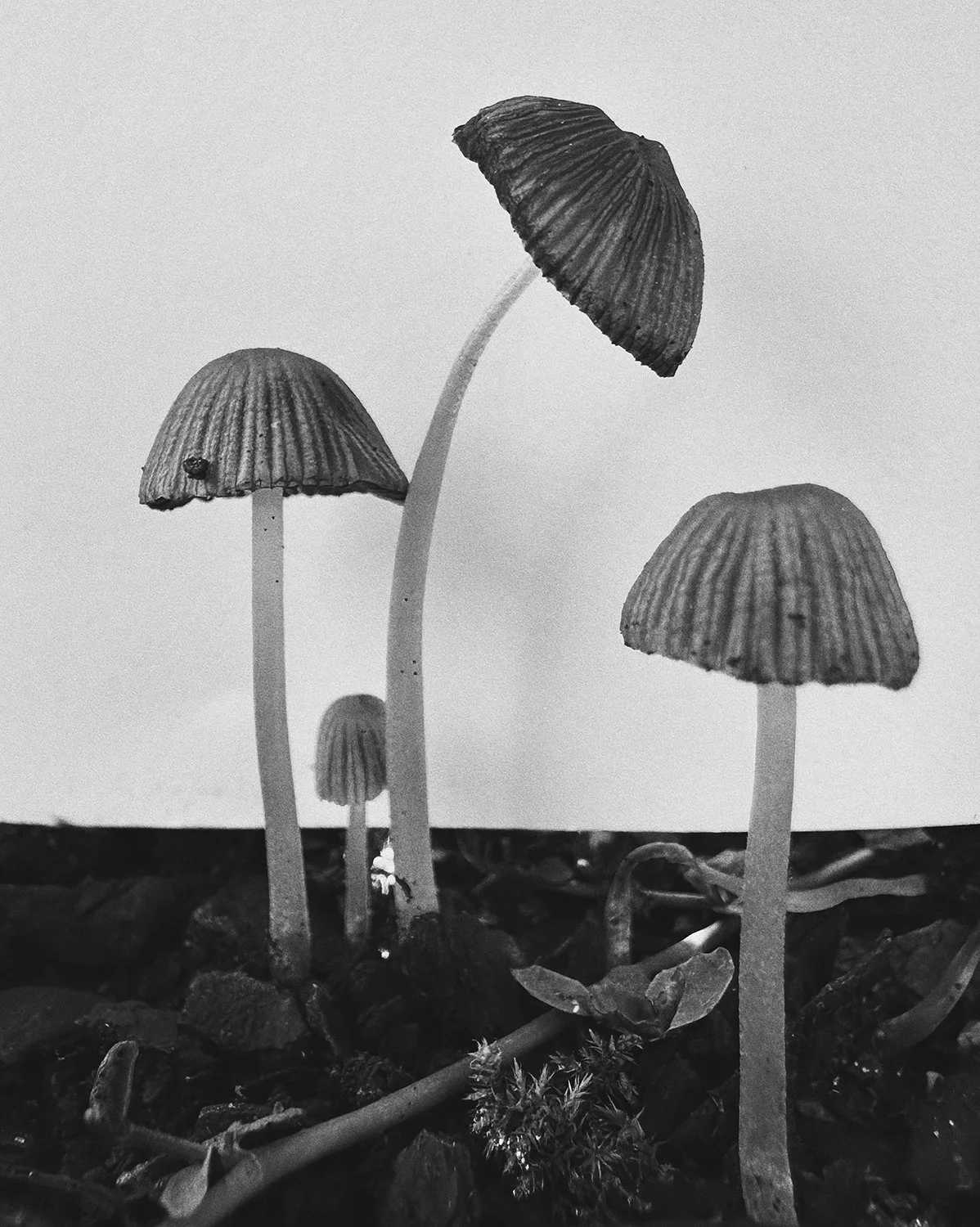
The first time I felt that this was something more that “just” photographing mushrooms happened the first time I placed a white card behind one of the mushrooms to see how it looked isolated from its environment. I saw, for the first time, a portrait that had these incredibly human traits. I began to think of these photographs as portraits of women with different hairstyles and at various stages of life with various kinships.
In the book, some fungi stand alone, others appear like couples or crowded gatherings. How much did you think of them as “characters” or portraits when you were deciding how to frame and sequence the images?
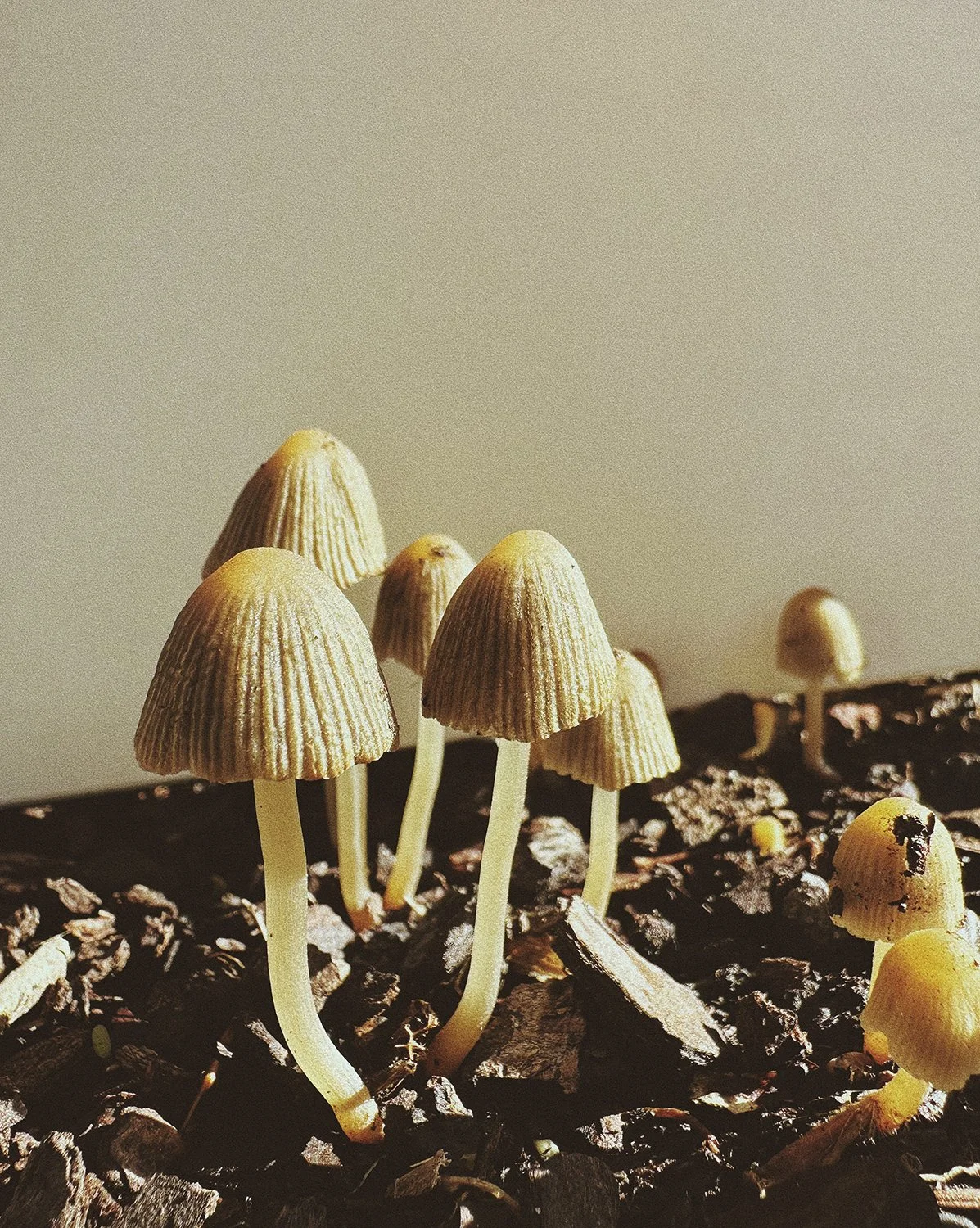
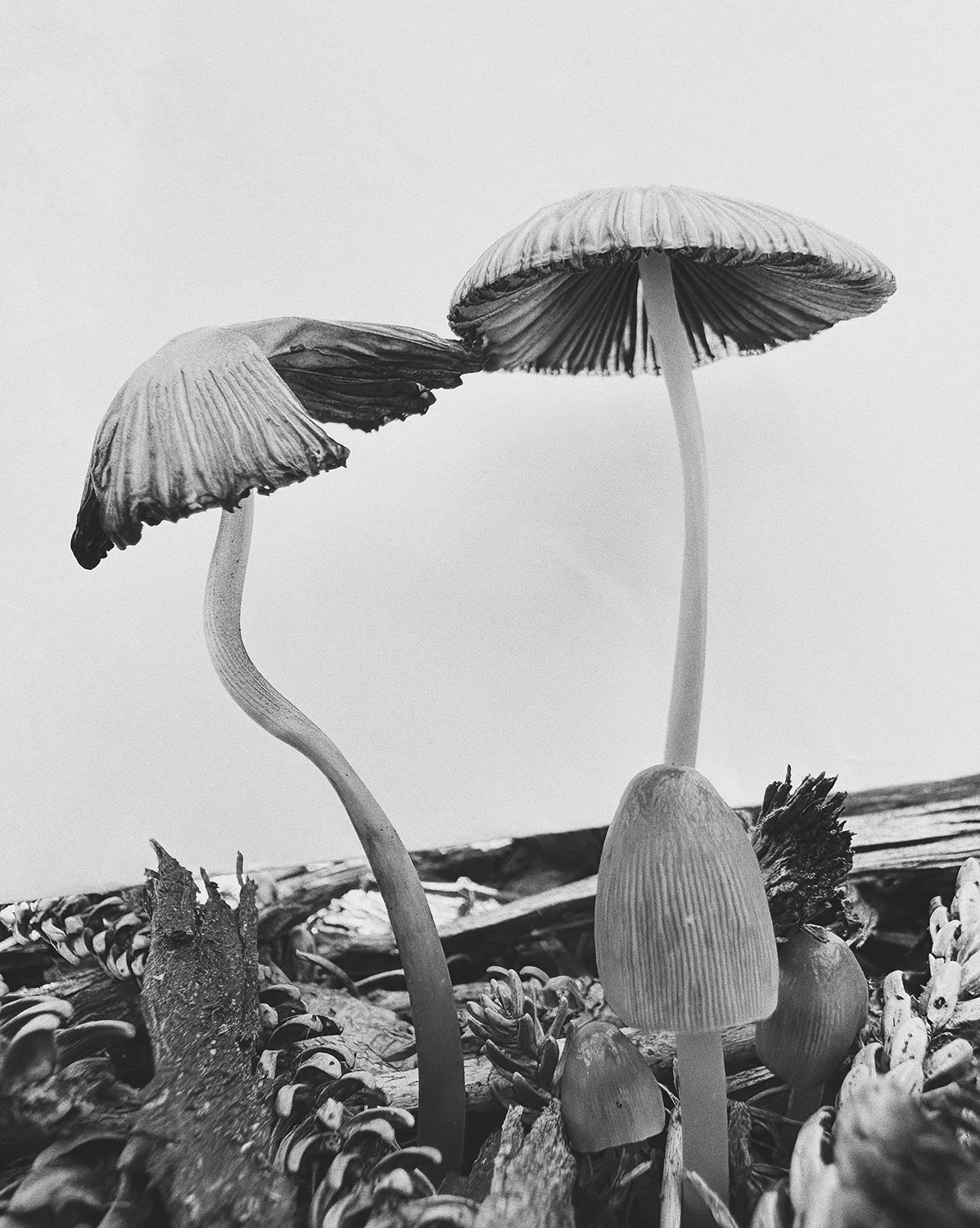
The images of mushrooms in groups or in couples stood out to me immediately as portraits of relational creatures. I was conscious of making these portraits to show a wide variety of relationships at different stages of their life cycles in a way that is recognizable and relatable to humans. This was a way for me to draw closer to my premise of value and productivity beyond that of fertility and acknowledging the role of nurturing and caregiving within that framework.
© Ying Ang / Perimeter Editions
ISBN 978-1-922545-44-2
Published by Perimeter Editions
Otabind, softcover, 23 x 27 cm, 160 Pages
© Ying Ang / Perimeter Editions
ISBN 978-1-922545-44-2
Published by Perimeter Editions
Otabind, softcover, 23 x 27 cm, 160 Pages
When you photograph mushrooms, you’re clearly not just looking at plants—you’re using them as stand-ins for other cultural notions or ideas. How do mushrooms help you think through these concepts and how do you articulate them in the photos and books?
The mushroom itself is simply a signpost to a much larger organism and that is what I find extraordinary and entirely parallel to what I find fascinating about matriarchal networks. Fruiting Bodies became an exploration of invisible labour, both in a human sense and also a fungal sense. I had hoped that the reader would be able to see and recognize a part of themselves in these portraits and question what they value and know to be true about what it means to contribute to the world as an aging woman, where fertility and sexuality are no longer the driving forces behind their existence.
Your writing in the book feels part incantation, part diary, part directive. How did you build the dialogue between text and image so that the words deepen, rather than explain, what we see?
I am very conscious of avoiding text that is too didactic. The text is a way to flesh out an idea and a feeling, much in the same way as the photographs - a part of a much larger whole. Because of this approach, I can be freer with my language and am able to play with form in language across poetry and prose. The text was also about building a narrative that could capture the imagination of the viewer and lead them to a place where they could question the subtext of the images that they were looking at.
© Ying Ang / Perimeter Editions
ISBN 978-1-922545-44-2
Published by Perimeter Editions
Otabind, softcover, 23 x 27 cm, 160 Pages
© Ying Ang / Perimeter Editions
ISBN 978-1-922545-44-2
Published by Perimeter Editions
Otabind, softcover, 23 x 27 cm, 160 Pages
Mushrooms are tied to both decomposition and renewal. Is there one photograph in the series that, for you, holds those two energies in a particularly tense or surprising way?
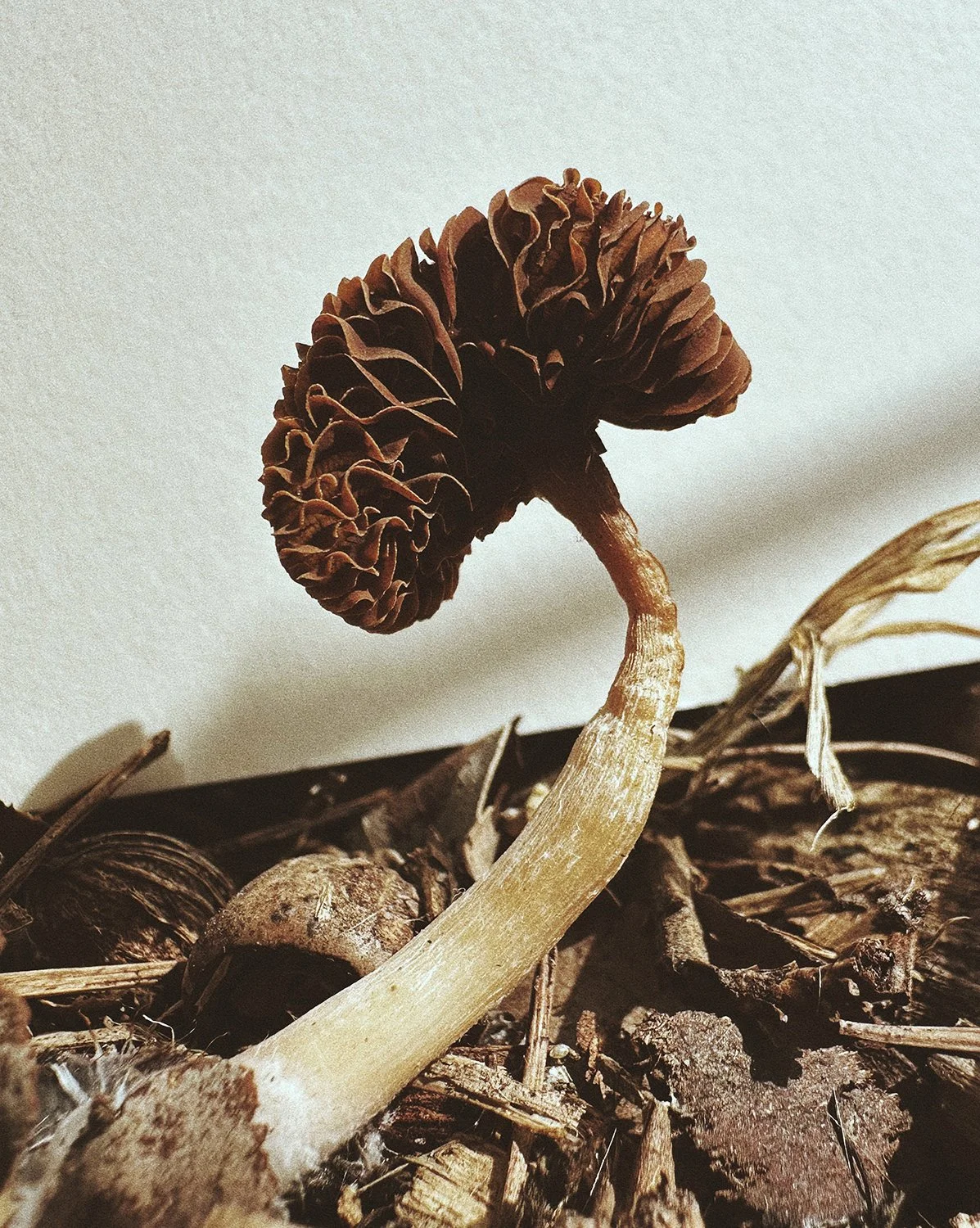
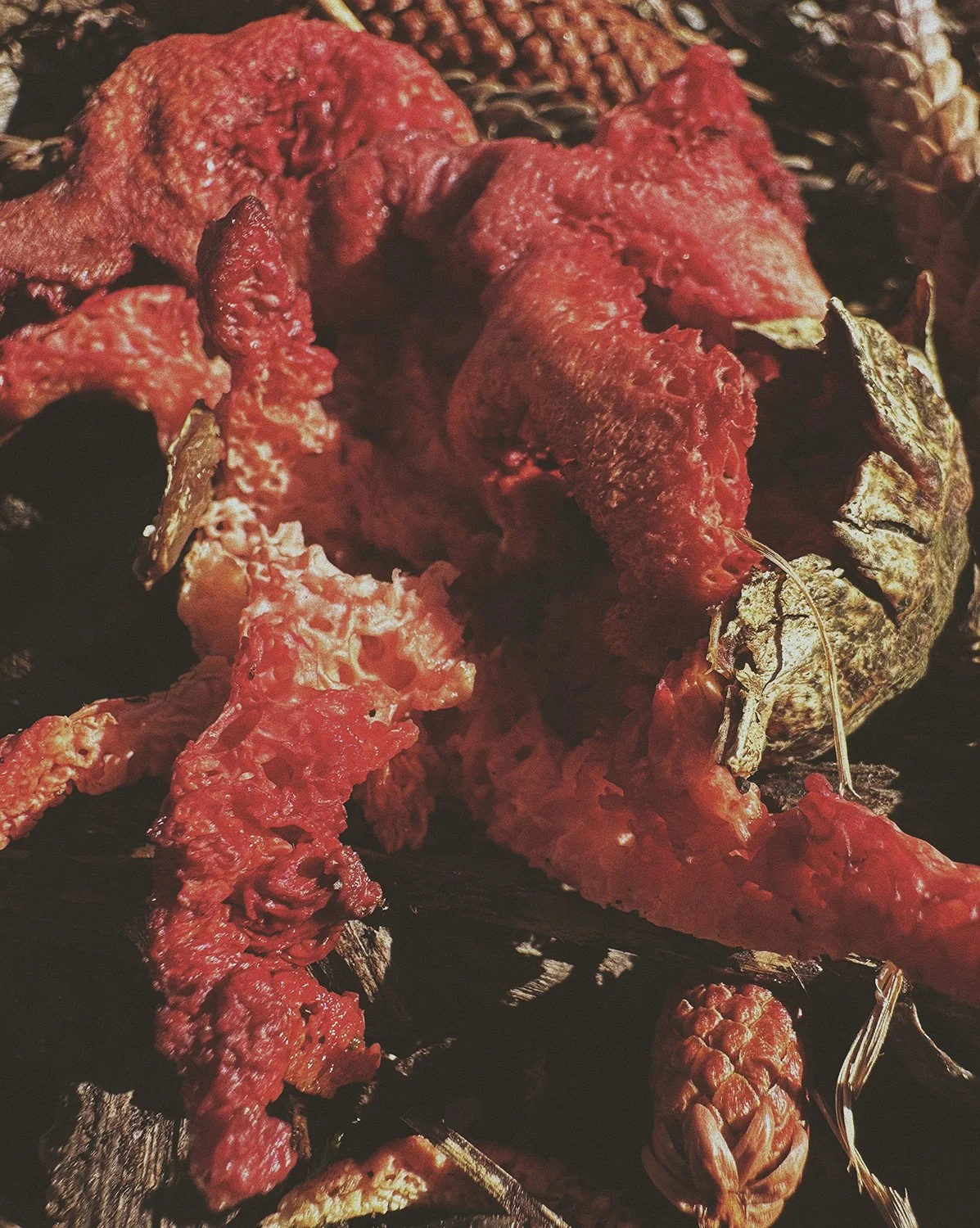
There is a photograph of a mushroom that has blood red tentacles and flies on it that directly suggests something recently dead and on the edge of decomposition. This mushroom, for those who have encountered it before, will trigger the memory of a deeply disturbing smell of rotting flesh. However, it is also true that the sense of death here is a lie. This particular mushrooms performs death whilst still very much alive.
The project questions ideas of beauty and humanity. Over the course of making the work, did your relationship to your own body—its changes, limits, and strengths—shift in any way?
This project came from an interrogation of my own body. The walks that I took while photographing these mushrooms were also times spent thinking about the value of my body now that I’m outside my fertile window. The photographs came from a place where I was questioning my own value in society, knowing that men no longer looked at me the way that they used to and that I was beginning to enter a time that many female authors have penned as a time of invisibility and liberation.
You often treat the mushrooms almost like still-life objects. Can you talk a bit about how you “stage” or frame them—what you pay attention to in the background, the light, or the angle—to turn them from something found on the forest floor into a metaphor for the body?
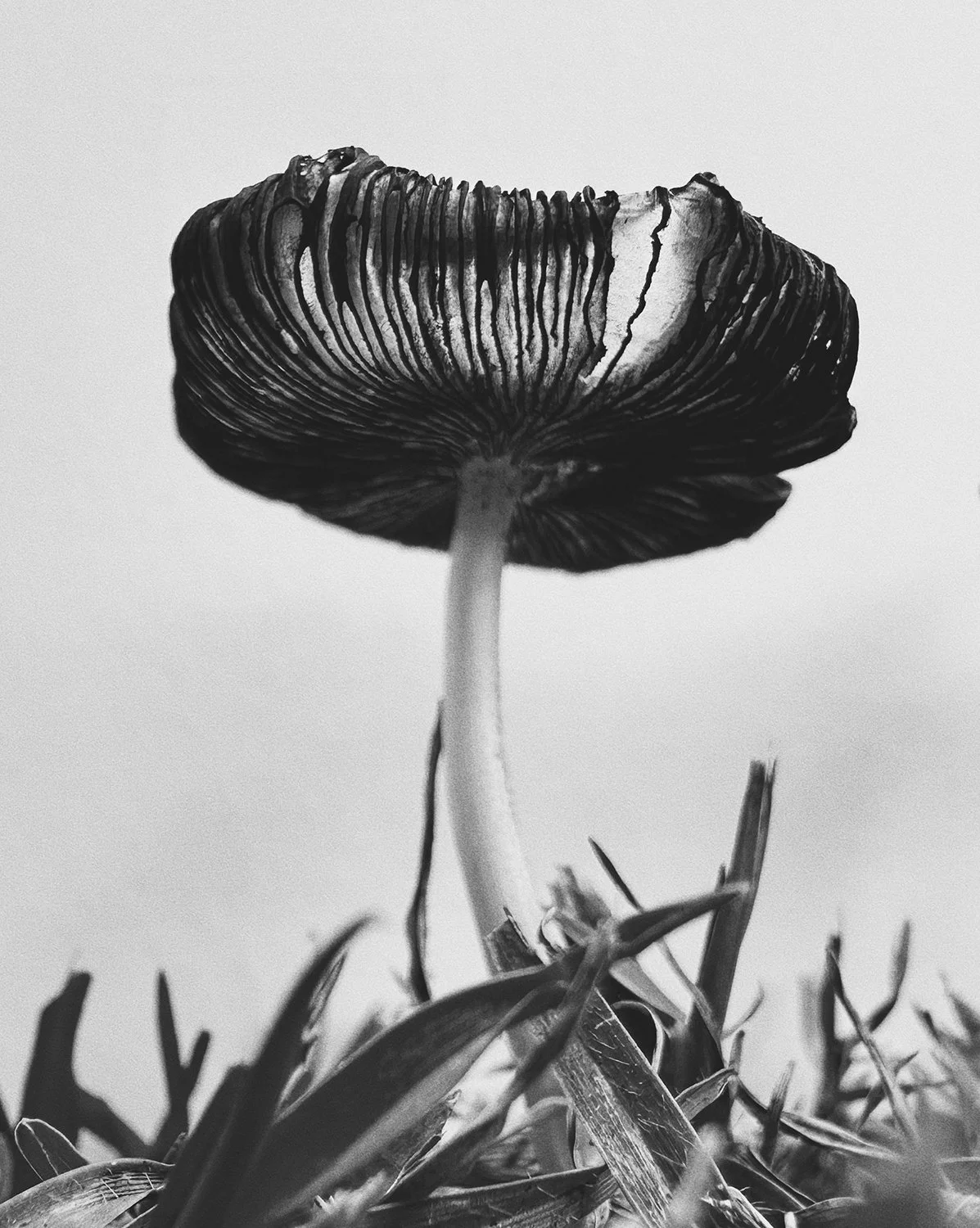
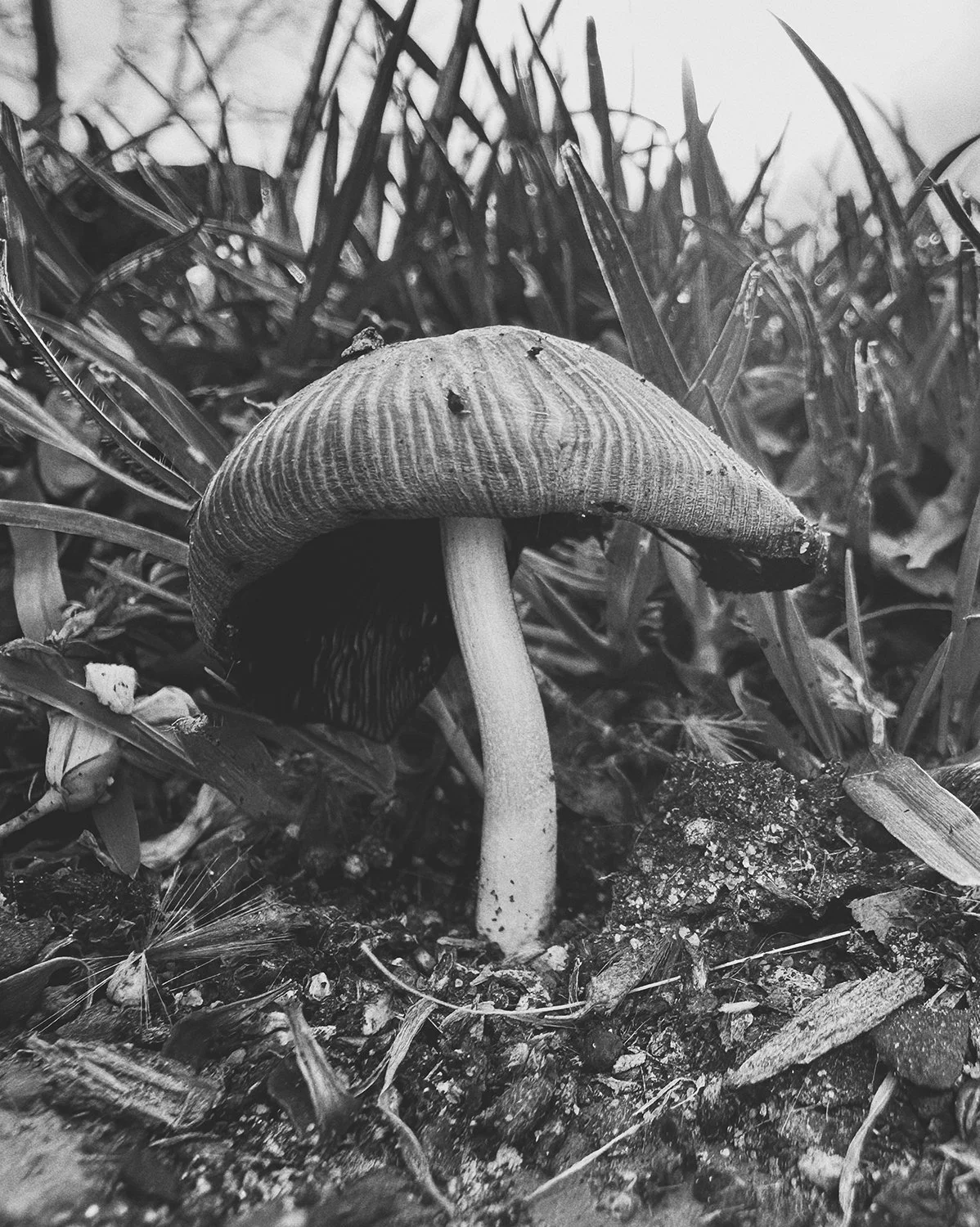
I come to the subject very close to the ground, with my lens virtually digging into the dirt. I like the frame to look up towards the mushroom if I can, so that they appear larger than life and hold a kind of gravitas in the photograph. I also like to vary where the light comes from to give the project a kind of dimensionality and dynamism. I make sure that there are no visible signs of humanity around, which was a challenge as these were all taken in an inner-city park, criss-crossed with footpaths, street lamps and power lines. I wanted this world to feel apart from what we have seen before and the mushrooms to be its larger-than-life population.
© Ying Ang / Perimeter Editions
ISBN 978-1-922545-44-2
Published by Perimeter Editions
Otabind, softcover, 23 x 27 cm, 160 Pages
© Ying Ang / Perimeter Editions
ISBN 978-1-922545-44-2
Published by Perimeter Editions
Otabind, softcover, 23 x 27 cm, 160 Pages
When you were editing and sequencing the book, how did you navigate that balance between attraction and unease? Were there images you loved that you left out because they tipped things too far toward either side?
There were a lot of photographs that I left out that I felt tipped the work too far in the direction of nature photography. I needed to make sure that there was a balance of tension in the sequence that allowed the viewer to continuously hold the idea that there is something deeper to think about and to not be seduced by the wonder of golden light in a beautiful natural landscape. This is one of the reasons why there are more black and white photographs in the book than colour and also why there are such a large number of images that feature the white backdrop.
What were some of the challenges you faced in making the work as a whole and the book in particular?
The greatest challenge that I faced in the making of this work was self doubt as it was unlike any other work I had made before. I didn’t know if it belonged in the world of visual art, documentary or mycology. At the end of the day, it was about trusting my instincts, the judgement of the viewer and a rapidly evolving global visual literacy.
© Ying Ang / Perimeter Editions
ISBN 978-1-922545-44-2
Published by Perimeter Editions
Otabind, softcover, 23 x 27 cm, 160 Pages
